10
9
8
7
6
5
4
3
2
1
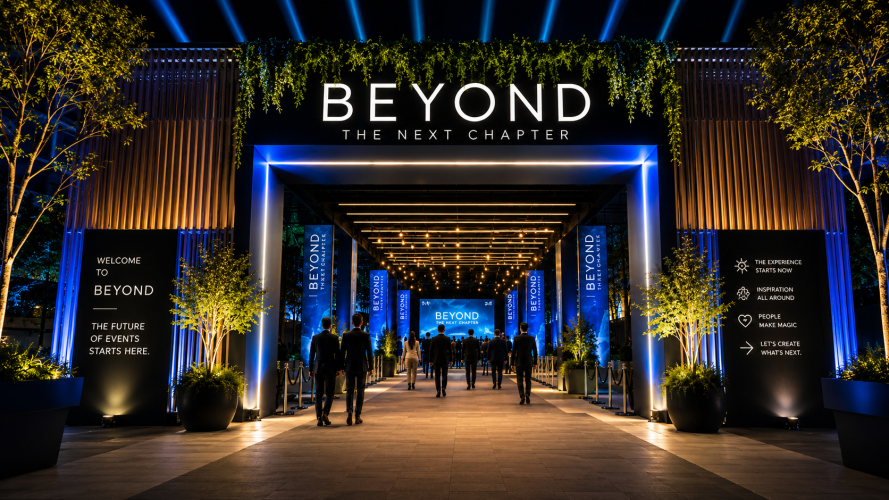
Image: AI-generated illustration (2026)
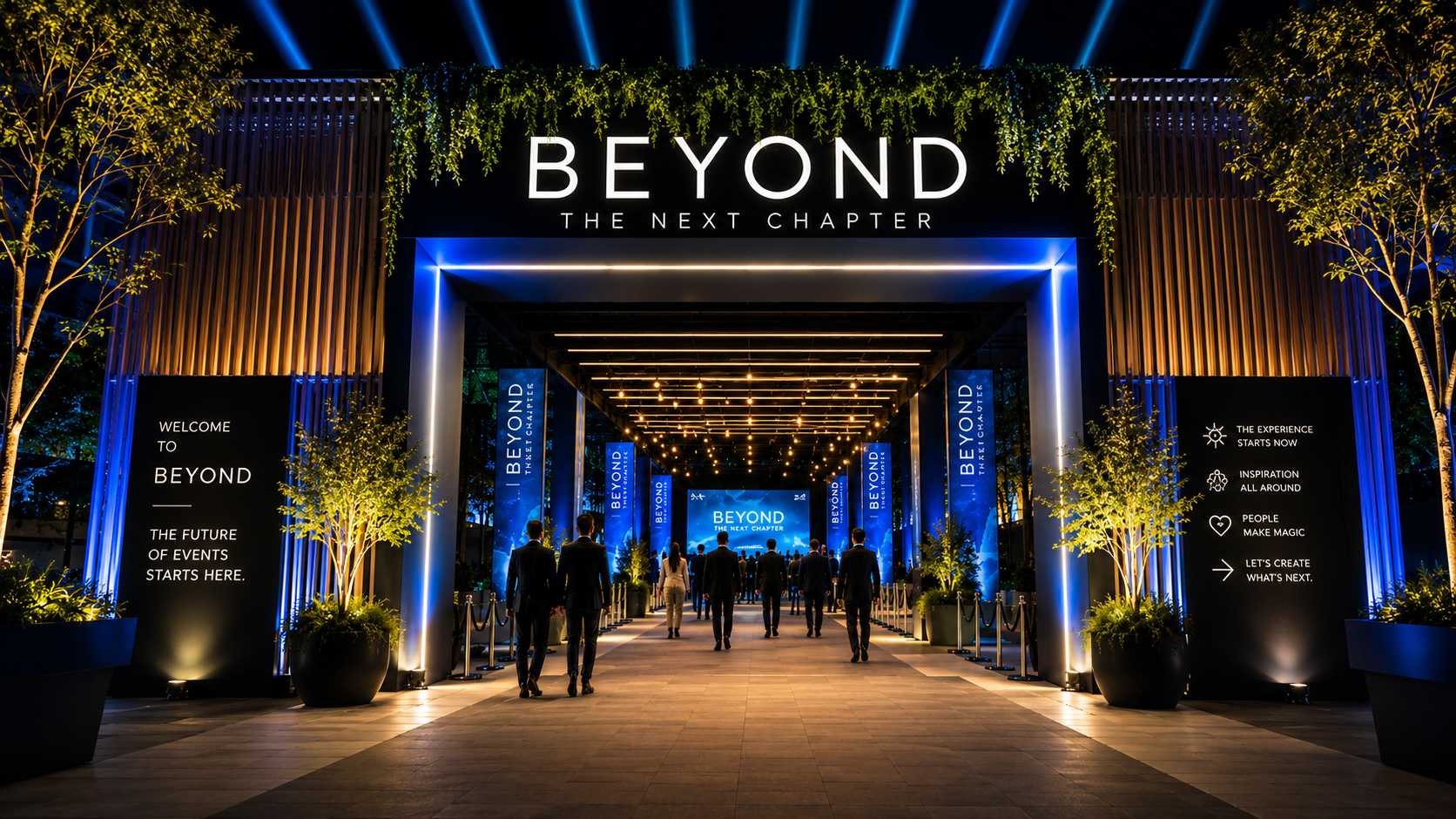
Image credit: AI-generated illustration (2026)
The Opening of an Event:
Why Arriving Is More Than a Transition
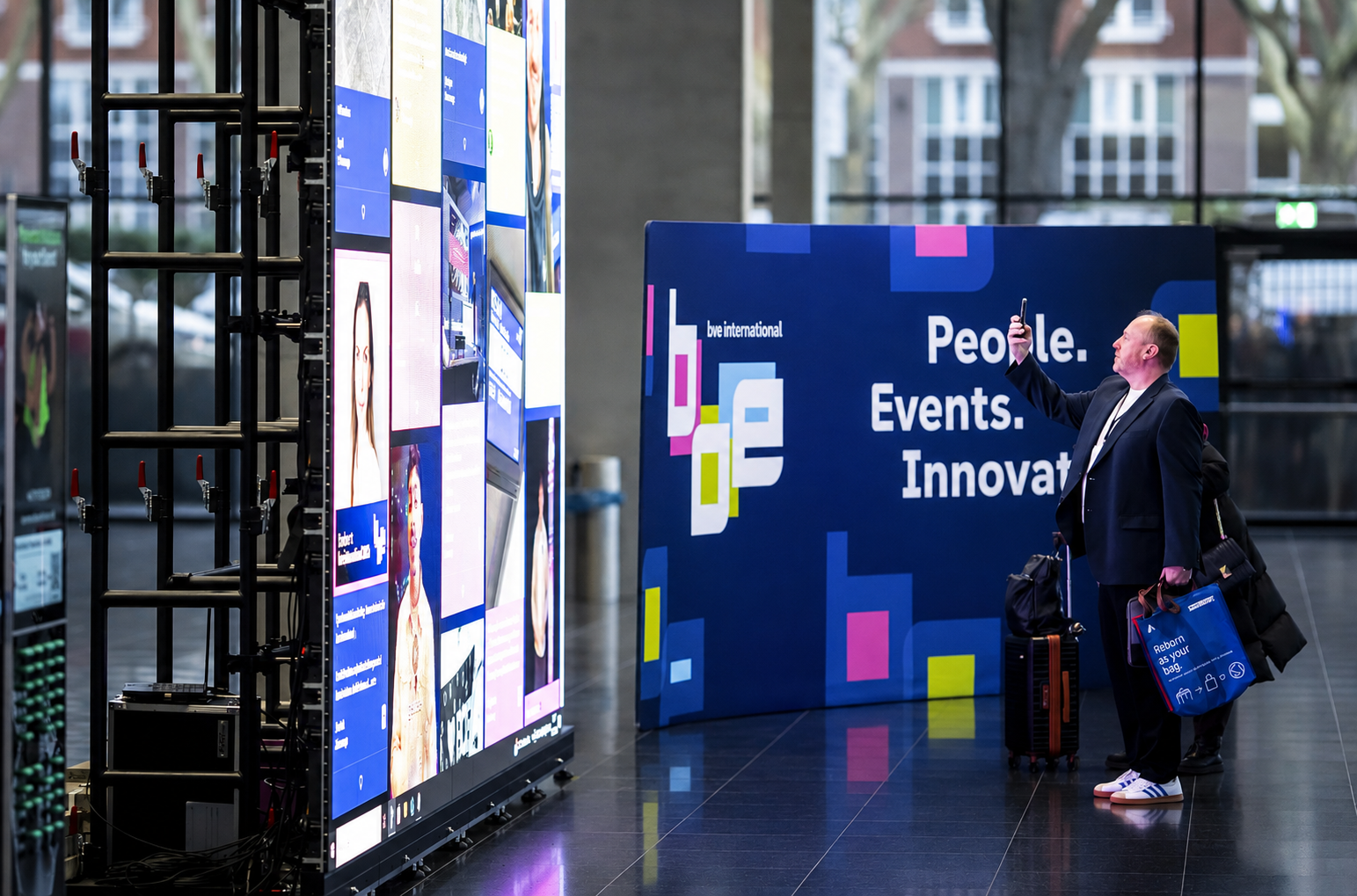
Copyright: Messe Dortmund / Wolfgang Helm
How the Entrance Introduces the Event’s Story
Before speakers appear, program content is presented, show acts are performed, or food is served, the entrance can already introduce the central idea. It conveys the values the event represents, the intended atmosphere, and the role guests play within the overall concept. This effect can be created subtly through colors, surfaces, lighting moods, and acoustic elements. A more overtly staged approach is equally possible, using a portal, a walk-through, projections, live performances, scent concepts, music, or a deliberately designed welcome ritual. What matters is that the entrance does not look generic but has a recognizable connection to the occasion. At a gala, it can build exclusivity, elegance, and anticipation. At a corporate event, it should make the brand, its stance, and its professional standards visible. At festivals, it can strengthen a sense of community and anticipation. At trade shows and conventions, it also helps guests find their way and sparks interest in topics, encounters, and the solutions on offer.
In this way, the entrance becomes the first narrative space of the event and translates the event concept into a moment that can be experienced first-hand.
The impression an event makes does not begin in the event space, on stage, or at dinner. It starts at the entrance. That first moment reveals whether guests feel welcome, in good hands, and curious, or whether unease, disorientation, and distance set in. A well-designed entrance creates clarity, builds atmosphere, and immediately conveys what the event stands for. Whether it is a gala, corporate event, trade show, or festival, the entrance is the first act of the entire production. When planned with purpose, simply arriving becomes an experience that stays in people’s memories.
From the Entrance to an Experiential Space: What Event Architecture Must Achieve
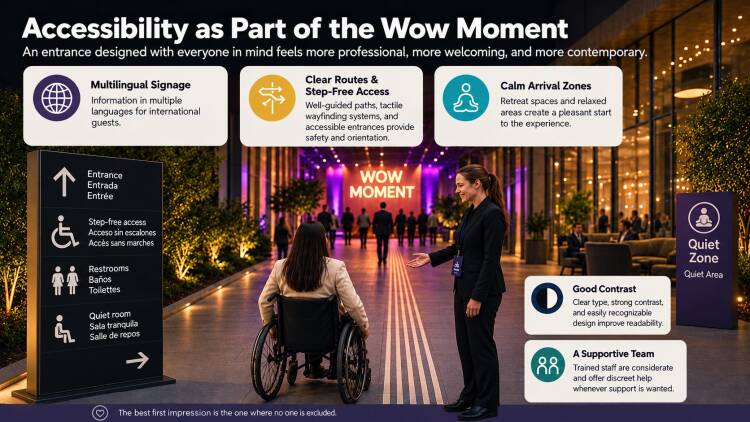
The spatial effect is shaped primarily by proportions, circulation routes, sightlines, materials, and transitions. Thoughtful event architecture draws guests into the experience. A distinctive portal can attract attention. A tunnel can heighten anticipation. A staged walkway makes the journey to the first program item part of the event itself. Different heights, directional lines of light, spatial compression, or distinctive materials give the entrance depth, character, and a sense of quality. The entrance can be impressive, but should also remain intuitive to navigate. Guests must be able to see quickly where to go, where registration takes place, and where the coat check, reception, security checkpoint, or photo spot is located.
Event architecture in the entrance area gives the first impression a visible form, bringing the concept, brand, and atmosphere together in a space that is both emotionally compelling and operationally sound.
Lights On, Emotions On: How Technology Intensifies the Opening
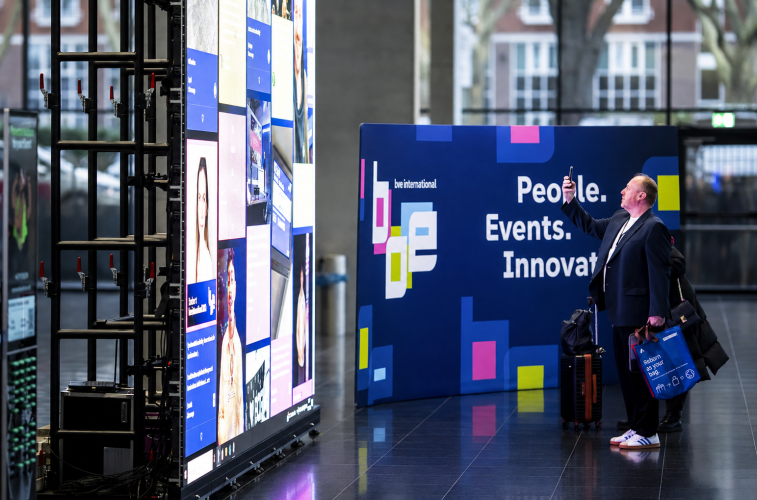
Technical solutions can heighten the emotional impact of an entrance without unnecessarily overloading the design. Lighting, sound, and media surfaces provide targeted stimuli, build anticipation, and turn the first step into the event into a powerful moment. An LED wall can present the event theme, a brand world, or key messages. Projection mapping can transform fixed architecture and set it visually in motion. Soundscapes create an acoustic atmosphere before guests reach the event area itself. Fog, moving lights, sensor technology, or interactive installations can also make the entrance more surprising and impressive. Depending on the occasion, technology serves different purposes: it can underscore elegance, spark curiosity about a new product, bring brand messages to life, or capture the energy of a festival. Media surfaces can also be used specifically for wayfinding and visitor guidance.
When technology is integrated with purpose, it is not an end in itself but an amplifier of atmosphere and emotion.
No Lines, No Stress: Check-In as Part of the Experience
Even the most impressive wow moment loses its impact if the entry process does not work. Long lines, confusing signage, slow accreditation procedures, or bottlenecks at the coat check disrupt the event experience and create frustration from the outset. Logistics must therefore not be left until the end of the planning process. They are an essential part of the guest experience. An effective check-in feels straightforward and natural. Digital tickets can be scanned quickly, badges are ready, security checks are clearly organized, and staff know the routes, procedures, and points of contact. The aim is for guests to arrive and immediately become part of the event. Design measures such as separate entrances for VIPs, media representatives, or larger groups support this. Clearly identifiable counters, digital information displays, mobile scanning teams, or a welcome desk are also useful.
A smooth check-in makes it clear at the entrance: this event has been thoroughly thought through.
More Than a Red Carpet: How Galas Shine Before Guests Enter the Hall
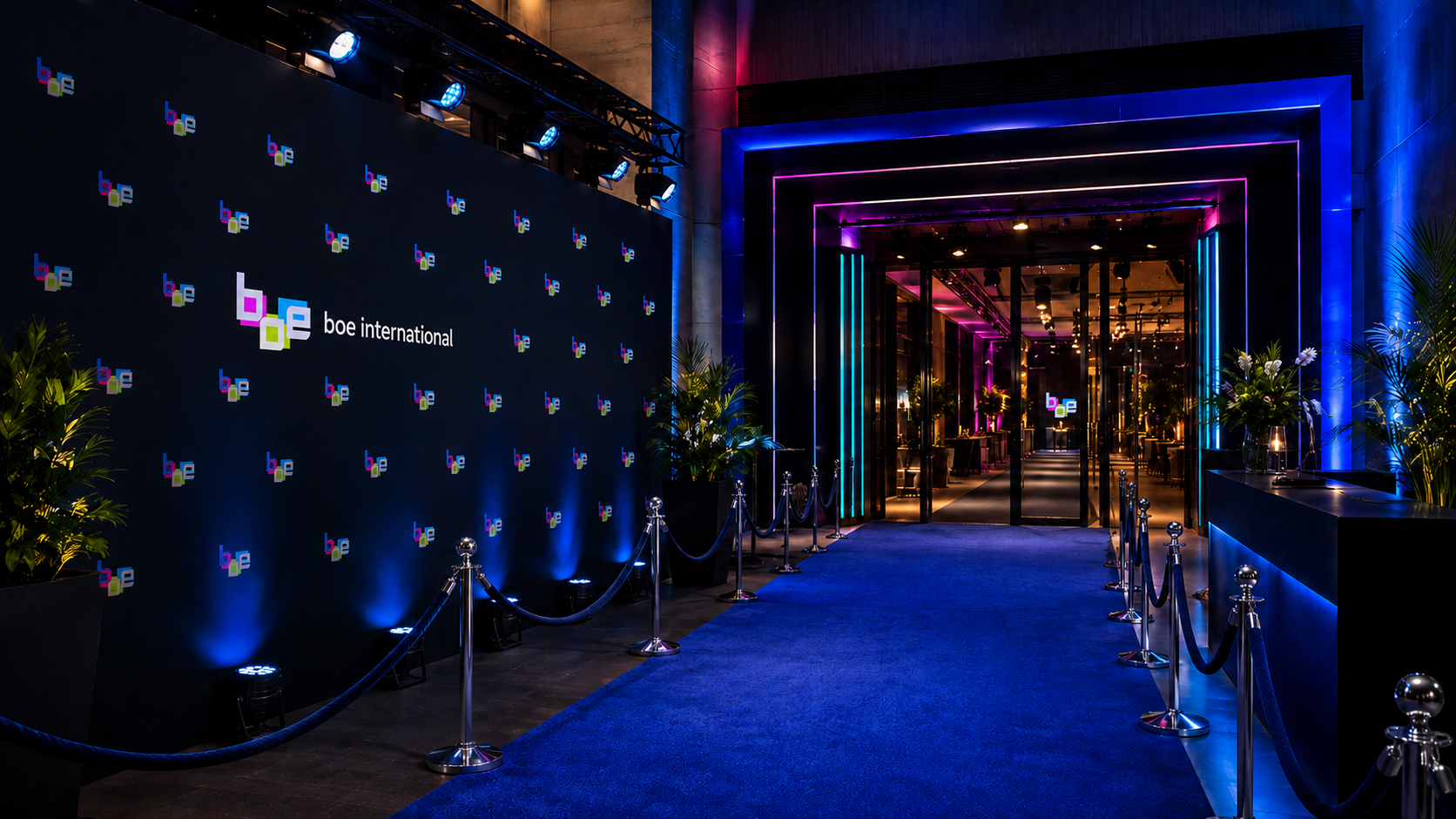
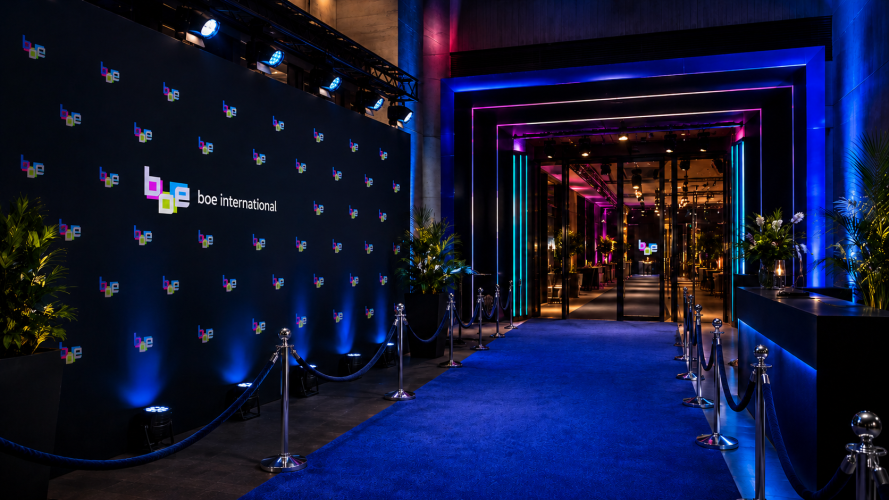
At galas, award ceremonies, and premieres, the entrance becomes a stage in its own right, where seeing and being seen play a central role. Guests do not simply arrive; they deliberately step into the scene. A red carpet, a photo wall, precisely positioned lighting, and a professionally managed reception create an appropriate setting. These elements give the occasion a sense of grandeur and make arriving part of the overall production. The experience is not aimed exclusively at celebrities or traditional VIPs, but also at invited guests, partners, customers, or employees. For a clearly structured process, the following questions must be settled: Who welcomes which guests? Where are photos taken? What routes do the press, VIPs, and regular visitors follow? How do the dress code, branding, lighting, and welcome communication work together?
A well-designed gala entrance creates attention, atmosphere, and a sense of quality long before the first program item begins in the hall.
A well-designed entrance lives on in images, Stories, Reels, and social media posts. If it is visually distinctive, well lit, and features a surprising element, it quickly becomes an appealing content moment. A conventional photo wall alone is often no longer enough. Contemporary content spots use spatial depth, unusual angles, lighting, movement, or small interactive elements. A distinctive portal, a moving installation, or a playful element can encourage guests to capture and share their arrival. The branding should be clearly recognizable without completely dominating the image. The entrance must fit the event’s character and create a visual environment guests are happy to be seen in.
In this way, the entrance becomes a platform for additional reach. The first impression not only stays in people’s memories but also becomes part of their digital feeds.
How Crowd Management Makes the Entrance Safer
The entrance is a particularly sensitive operational interface. Many guests arrive within a short time, tickets are checked, bags are inspected, access points are sought, and expectations build. If crowding, uncertainty, or a frantic atmosphere develop here, the mood can shift within minutes. Professional crowd management ensures that security measures are not perceived as disruptive interruptions. Clear circulation routes, easily recognizable wayfinding systems, trained teams, and sensibly placed checkpoints keep visitor flow steady and reduce stress. External factors such as weather conditions, covered waiting areas, emergency exits, and potential bottlenecks must also be considered early in the planning process. Particularly at festivals, concerts, large-scale events, and public events, the organization of the entrance area determines whether guests begin the experience feeling calm or tense.
Safety and atmosphere must not be treated as opposites. Ideally, they reinforce one another and together inspire trust.
boe international Shows What Events Need Today
The example of the entrance makes clear how many components contribute to a successful event: space, technology, equipment, service, safety and security, and creative ideas. None of these areas achieves its full impact on its own. Only when they work together does the moment arise when guests do not merely get there, but truly arrive. This is precisely why the topic of entrances is such a good fit for boe international. It brings together all the areas that turn an entrance into more than a point of access: event architecture, lighting, sound, media technology, furnishings, digital tools, hospitality, and service providers who ensure operations are as smooth as they are effective.
Bildnachweis: KI-generierte Illustration (2026)
The Brand Begins at the Door: Entrances for Corporate Events
At corporate events, too, the entrance is more than a reception area. It is the first visible and tangible expression of the brand promise. From the moment guests enter, it conveys what a company stands for, its stance, and the mood it wants to evoke among participants. This applies equally to conventions, sales kickoffs, customer events, internal events, and employer branding formats. The entrance can convey professionalism, foster identification with the brand, or create a sense of change and new beginnings. Colors, materials, key messages, media surfaces, and the way guests are welcomed should therefore not be chosen at random, but should fit the brand identity and the event’s objectives. If innovation is the focus, the entrance can be experimental, technology-driven, and confident. If recognition and appreciation are the priority, a personal approach, a warm atmosphere, and straightforward wayfinding matter more. At employer branding events, the entrance can already convey how corporate culture is actually experienced and put into practice.
The entrance is the first concrete indication that brand messages are not only communicated but consistently put into practice.
Share the Entrance: When the Entrance Becomes a Content Spot
© Privat
Welcome, Done Right: Why Hospitality Plays a Key Role in Shaping the Entrance
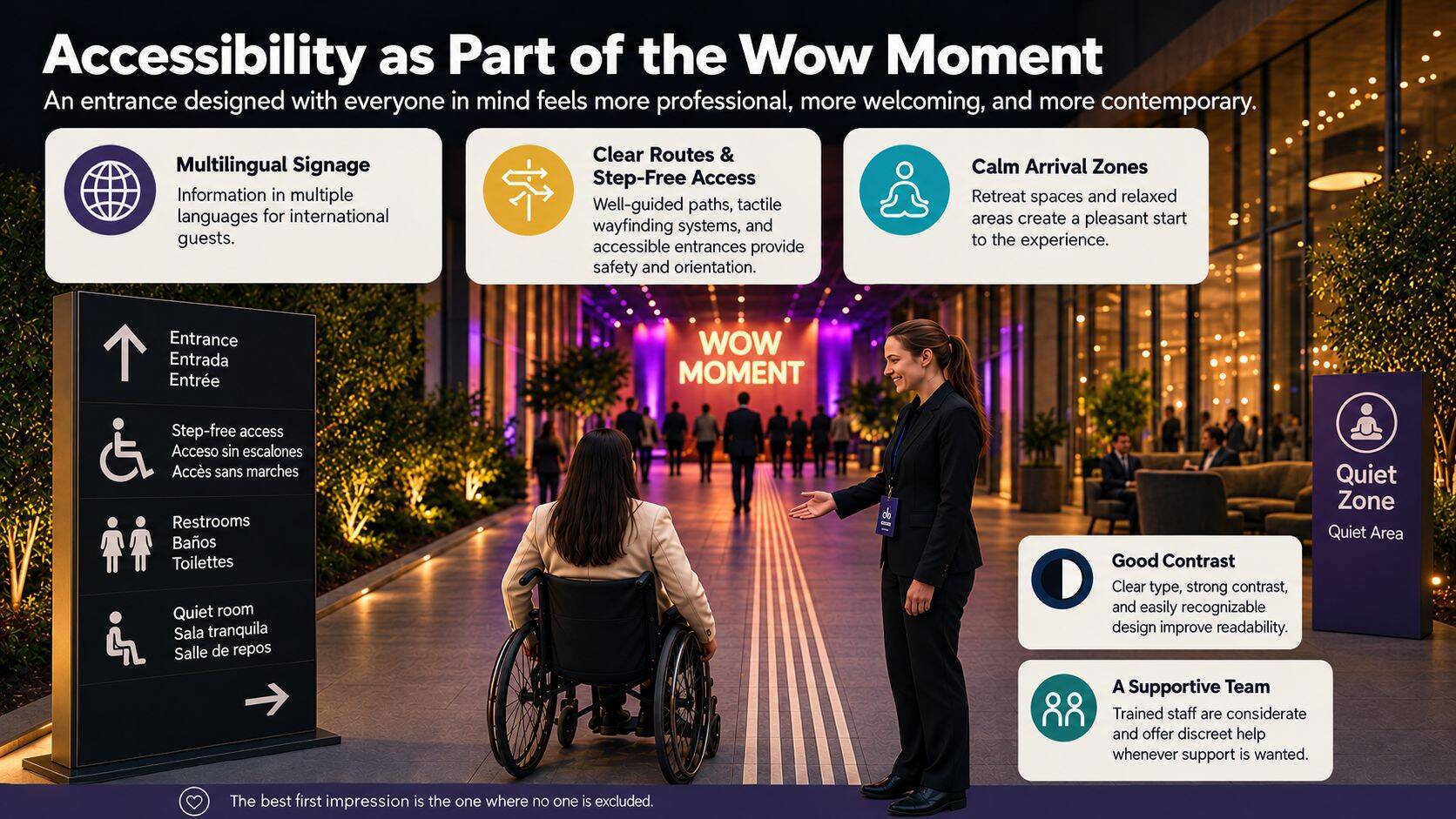
At least as important as spatial design, lighting atmosphere, and the use of technology are the people guests encounter on arrival. Hosts, reception staff, coat check teams, security staff, and guest welfare teams have a major influence on how the beginning of an event is perceived. Friendly eye contact, a personal greeting, or a welcome drink can have a stronger effect than a large-scale production. Especially at high-end formats, the tone determines how professional and appreciative the welcome feels. Attentiveness, composure, and warmth convey a sense of safety. A cold, overwhelmed, or impersonal reception can, by contrast, undermine even a compelling design concept.
Hospitality thus creates the emotional link between well-functioning processes and personal appreciation.
The First Impression as a Metric: Making Entrance Experiences Measurable
The entrance area can also be systematically evaluated using process, behavioral, and feedback data. Useful indicators include average waiting time, check-in duration, the speed of visitor flow, or recurring congestion at particular points. Social shares, the use of a content spot, time spent in the entrance zone, and guest feedback can also provide important insights.
The analysis shows where processes work and where adjustments should be made. This allows future events to be planned more precisely and existing entrance concepts to be improved continuously.
Copyright: Messe Dortmund / Wolfgang Helm
Image credit: AI-generated illustration (2026)
boe international Shows What Events Need Today
The example of the entrance makes clear how many components contribute to a successful event: space, technology, equipment, service, safety and security, and creative ideas. None of these areas achieves its full impact on its own. Only when they work together does the moment arise when guests do not merely get there, but truly arrive. This is precisely why the topic of entrances is such a good fit for boe international. It brings together all the areas that turn an entrance into more than a point of access: event architecture, lighting, sound, media technology, furnishings, digital tools, hospitality, and service providers who ensure operations are as smooth as they are effective.
The First Impression as a Metric: Making Entrance Experiences Measurable
The entrance area can also be systematically evaluated using process, behavioral, and feedback data. Useful indicators include average waiting time, check-in duration, the speed of visitor flow, or recurring congestion at particular points. Social shares, the use of a content spot, time spent in the entrance zone, and guest feedback can also provide important insights.
The analysis shows where processes work and where adjustments should be made. This allows future events to be planned more precisely and existing entrance concepts to be improved continuously.
10
Image: AI-generated illustration (2026)
How Crowd Management Makes the Entrance Safer
The entrance is a particularly sensitive operational interface. Many guests arrive within a short time, tickets are checked, bags are inspected, access points are sought, and expectations build. If crowding, uncertainty, or a frantic atmosphere develop here, the mood can shift within minutes. Professional crowd management ensures that security measures are not perceived as disruptive interruptions. Clear circulation routes, easily recognizable wayfinding systems, trained teams, and sensibly placed checkpoints keep visitor flow steady and reduce stress. External factors such as weather conditions, covered waiting areas, emergency exits, and potential bottlenecks must also be considered early in the planning process. Particularly at festivals, concerts, large-scale events, and public events, the organization of the entrance area determines whether guests begin the experience feeling calm or tense.
Safety and atmosphere must not be treated as opposites. Ideally, they reinforce one another and together inspire trust.
9
A well-designed entrance lives on in images, Stories, Reels, and social media posts. If it is visually distinctive, well lit, and features a surprising element, it quickly becomes an appealing content moment. A conventional photo wall alone is often no longer enough. Contemporary content spots use spatial depth, unusual angles, lighting, movement, or small interactive elements. A distinctive portal, a moving installation, or a playful element can encourage guests to capture and share their arrival. The branding should be clearly recognizable without completely dominating the image. The entrance must fit the event’s character and create a visual environment guests are happy to be seen in.
In this way, the entrance becomes a platform for additional reach. The first impression not only stays in people’s memories but also becomes part of their digital feeds.
Share the Entrance: When the Entrance Becomes a Content Spot
8
Welcome, Done Right: Why Hospitality Plays a Key Role in Shaping the Entrance
At least as important as spatial design, lighting atmosphere, and the use of technology are the people guests encounter on arrival. Hosts, reception staff, coat check teams, security staff, and guest welfare teams have a major influence on how the beginning of an event is perceived. Friendly eye contact, a personal greeting, or a welcome drink can have a stronger effect than a large-scale production. Especially at high-end formats, the tone determines how professional and appreciative the welcome feels. Attentiveness, composure, and warmth convey a sense of safety. A cold, overwhelmed, or impersonal reception can, by contrast, undermine even a compelling design concept.
Hospitality thus creates the emotional link between well-functioning processes and personal appreciation.
7
The Brand Begins at the Door: Entrances for Corporate Events
At corporate events, too, the entrance is more than a reception area. It is the first visible and tangible expression of the brand promise. From the moment guests enter, it conveys what a company stands for, its stance, and the mood it wants to evoke among participants. This applies equally to conventions, sales kickoffs, customer events, internal events, and employer branding formats. The entrance can convey professionalism, foster identification with the brand, or create a sense of change and new beginnings. Colors, materials, key messages, media surfaces, and the way guests are welcomed should therefore not be chosen at random, but should fit the brand identity and the event’s objectives. If innovation is the focus, the entrance can be experimental, technology-driven, and confident. If recognition and appreciation are the priority, a personal approach, a warm atmosphere, and straightforward wayfinding matter more. At employer branding events, the entrance can already convey how corporate culture is actually experienced and put into practice.
The entrance is the first concrete indication that brand messages are not only communicated but consistently put into practice.
6
At galas, award ceremonies, and premieres, the entrance becomes a stage in its own right, where seeing and being seen play a central role. Guests do not simply arrive; they deliberately step into the scene. A red carpet, a photo wall, precisely positioned lighting, and a professionally managed reception create an appropriate setting. These elements give the occasion a sense of grandeur and make arriving part of the overall production. The experience is not aimed exclusively at celebrities or traditional VIPs, but also at invited guests, partners, customers, or employees. For a clearly structured process, the following questions must be settled: Who welcomes which guests? Where are photos taken? What routes do the press, VIPs, and regular visitors follow? How do the dress code, branding, lighting, and welcome communication work together?
A well-designed gala entrance creates attention, atmosphere, and a sense of quality long before the first program item begins in the hall.
More Than a Red Carpet: How Galas Shine Before Guests Enter the Hall
5
No Lines, No Stress: Check-In as Part of the Experience
Even the most impressive wow moment loses its impact if the entry process does not work. Long lines, confusing signage, slow accreditation procedures, or bottlenecks at the coat check disrupt the event experience and create frustration from the outset. Logistics must therefore not be left until the end of the planning process. They are an essential part of the guest experience. An effective check-in feels straightforward and natural. Digital tickets can be scanned quickly, badges are ready, security checks are clearly organized, and staff know the routes, procedures, and points of contact. The aim is for guests to arrive and immediately become part of the event. Design measures such as separate entrances for VIPs, media representatives, or larger groups support this. Clearly identifiable counters, digital information displays, mobile scanning teams, or a welcome desk are also useful.
A smooth check-in makes it clear at the entrance: this event has been thoroughly thought through.
4
Lights On, Emotions On: How Technology Intensifies the Opening
Technical solutions can heighten the emotional impact of an entrance without unnecessarily overloading the design. Lighting, sound, and media surfaces provide targeted stimuli, build anticipation, and turn the first step into the event into a powerful moment. An LED wall can present the event theme, a brand world, or key messages. Projection mapping can transform fixed architecture and set it visually in motion. Soundscapes create an acoustic atmosphere before guests reach the event area itself. Fog, moving lights, sensor technology, or interactive installations can also make the entrance more surprising and impressive. Depending on the occasion, technology serves different purposes: it can underscore elegance, spark curiosity about a new product, bring brand messages to life, or capture the energy of a festival. Media surfaces can also be used specifically for wayfinding and visitor guidance.
When technology is integrated with purpose, it is not an end in itself but an amplifier of atmosphere and emotion.
3
From the Entrance to an Experiential Space: What Event Architecture Must Achieve
The spatial effect is shaped primarily by proportions, circulation routes, sightlines, materials, and transitions. Thoughtful event architecture draws guests into the experience. A distinctive portal can attract attention. A tunnel can heighten anticipation. A staged walkway makes the journey to the first program item part of the event itself. Different heights, directional lines of light, spatial compression, or distinctive materials give the entrance depth, character, and a sense of quality. The entrance can be impressive, but should also remain intuitive to navigate. Guests must be able to see quickly where to go, where registration takes place, and where the coat check, reception, security checkpoint, or photo spot is located.
Event architecture in the entrance area gives the first impression a visible form, bringing the concept, brand, and atmosphere together in a space that is both emotionally compelling and operationally sound.
Bildnachweis: KI-generierte Illustration (2026)
1
2
How the Entrance Introduces the Event’s Story
Before speakers appear, program content is presented, show acts are performed, or food is served, the entrance can already introduce the central idea. It conveys the values the event represents, the intended atmosphere, and the role guests play within the overall concept. This effect can be created subtly through colors, surfaces, lighting moods, and acoustic elements. A more overtly staged approach is equally possible, using a portal, a walk-through, projections, live performances, scent concepts, music, or a deliberately designed welcome ritual. What matters is that the entrance does not look generic but has a recognizable connection to the occasion. At a gala, it can build exclusivity, elegance, and anticipation. At a corporate event, it should make the brand, its stance, and its professional standards visible. At festivals, it can strengthen a sense of community and anticipation. At trade shows and conventions, it also helps guests find their way and sparks interest in topics, encounters, and the solutions on offer.
In this way, the entrance becomes the first narrative space of the event and translates the event concept into a moment that can be experienced first-hand.
The impression an event makes does not begin in the event space, on stage, or at dinner. It starts at the entrance. That first moment reveals whether guests feel welcome, in good hands, and curious, or whether unease, disorientation, and distance set in. A well-designed entrance creates clarity, builds atmosphere, and immediately conveys what the event stands for. Whether it is a gala, corporate event, trade show, or festival, the entrance is the first act of the entire production. When planned with purpose, simply arriving becomes an experience that stays in people’s memories.
The Opening of an Event:
Why Arriving Is More Than a Transition