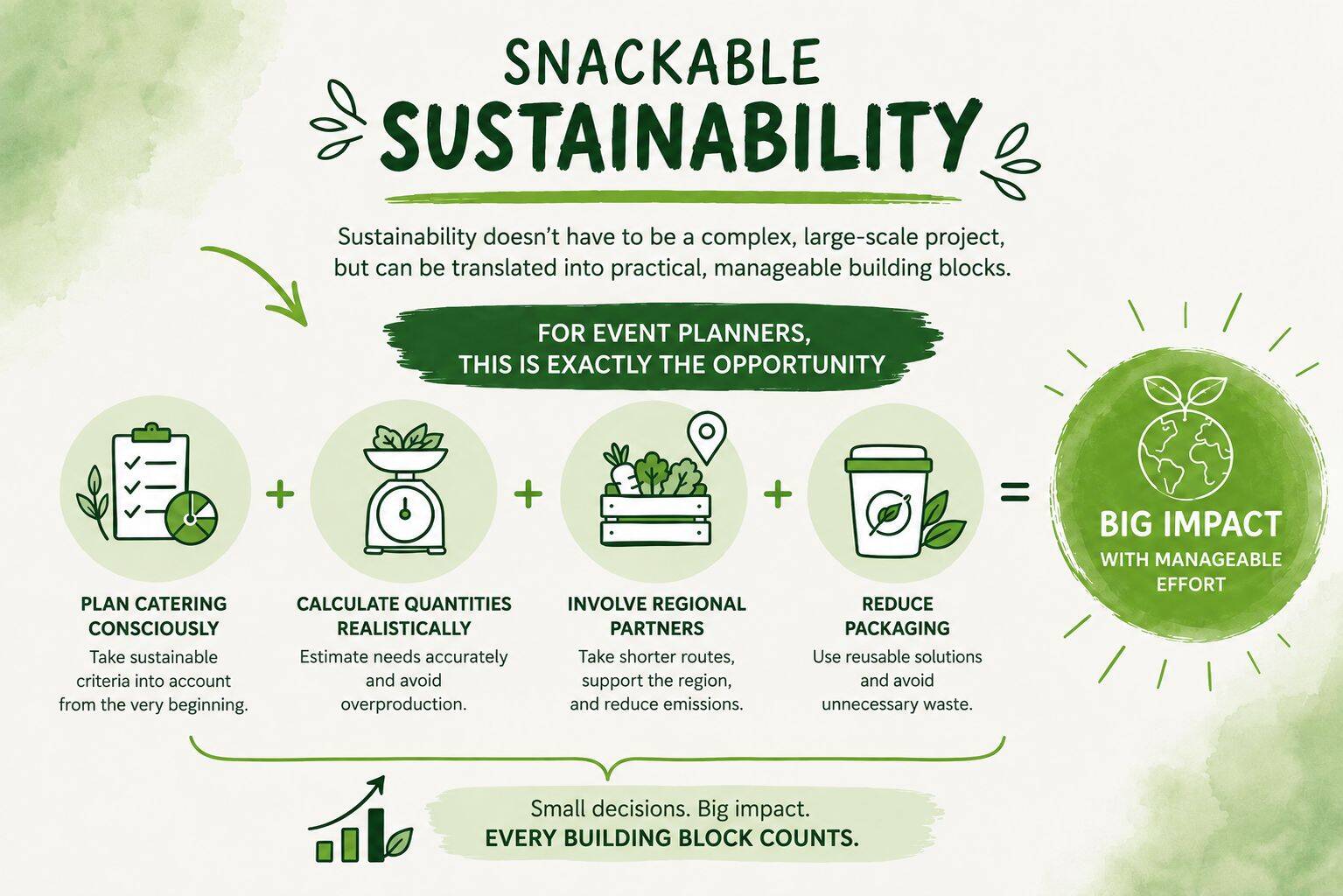
Image credit: AI-generated illustration (2026)
Good to Know:
Under the EmpCo requirements, greenwashing will come under even greater scrutiny. Since September 27, 2026, companies have been required to review environmental and sustainability claims particularly carefully. Whether a claim uses terms such as “sustainable,” “climate-neutral,” “environmentally friendly,” “durable,” or “repairable,” among others, from that date onward it may be used only if it is clearly understandable, verifiable, and factually accurate. Companies that advertise with unsubstantiated sustainability promises risk formal warning notices, regulatory action, and substantial fines.
Disposable packaging, plastic portion packs, and oversized serving setups are not unavoidable in event catering. Image: Rolf van de Wal / Pixabay.com
Snackable Sustainability:
3 Ideas for More Sustainable Catering Without Much Extra Effort
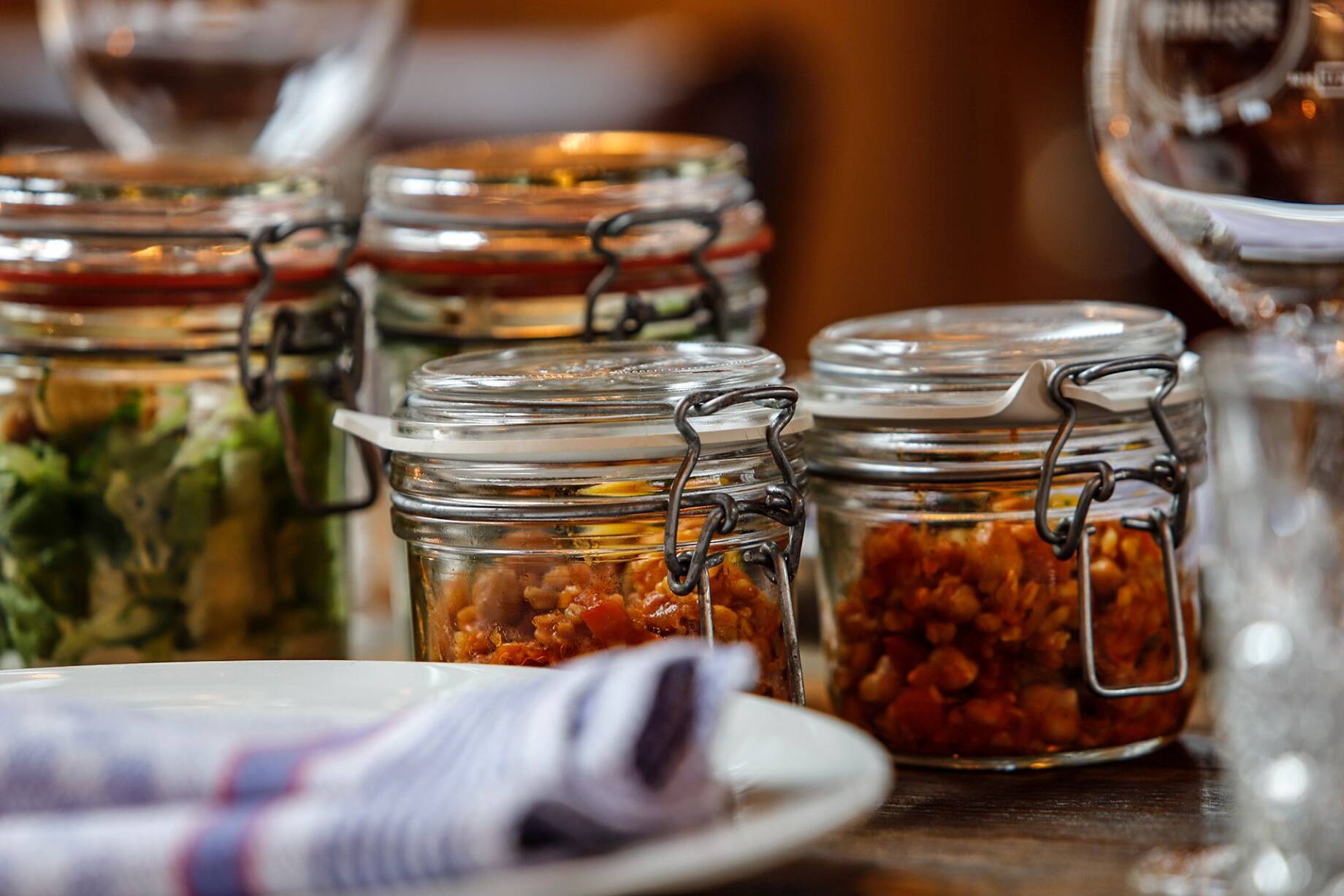
Many more sustainable solutions are easy to incorporate: reusable tableware, pitchers and glasses instead of individual bottles, water dispensers instead of individual containers, or napkins made from recycled material. Image: © Cateringmanufaktur
Small Steps That Send a Strong Message
Snackable Sustainability means viewing sustainability not as one large, complex project but as a series of small, meaningful, and manageable building blocks. For event planners, that is precisely where the opportunity lies. Those who plan catering deliberately, estimate quantities more realistically, involve regional partners, and reduce packaging can make a significant difference with manageable effort. These choices also add value to the overall event experience. Guests experience catering that feels more modern, lighter, and better thought-out. Sustainability thus becomes a natural part of a professional event culture.
Less Packaging, More Experience
Single-use packaging and plastic portion packs can be avoided, at least in part, at many events. Reusable tableware, pitchers and glasses instead of individual bottles, reusable serving trays, or edible containers offer alternatives that not only reduce waste but can also be visually appealing. Presenting reusable solutions and unpackaged offerings in a high-quality way creates a cohesive and attractive overall look. Particularly with snacks, small dishes can be presented beautifully on platters, tiered serving stands, and in ceramic bowls.
Practical idea: A water station with herbs, citrus fruits, or berries replaces numerous individual containers while also looking inviting. Small dessert portions served in glasses instead of disposable cups are likewise easy to offer and look high-quality.
Practical idea: Specific references such as “potatoes from a farm in the region,” “seasonal vegetables from North Rhine-Westphalia,” or “bread from the local bakery” are more credible than broad, general claims. This makes sustainability visible without sounding like exaggerated advertising.
A completely reimagined food concept, a radical overhaul of every process, or a sweeping sustainability pledge on the menu is not always necessary. Often, small, well-considered measures are precisely what make a tangible difference—for guests, organizers, and service providers.
Catering shapes the atmosphere, encourages interaction, and contributes significantly to the quality of an event experience. At the same time, it is one of the areas where sustainability can be put into practice particularly concretely: through realistic quantity planning, more deliberate product choices, and an appealing presentation of what already makes sense. Here are three ideas for making catering more sustainable without much additional effort while also creating visible added value for the event:
Small Portions Instead of Lavish Buffets
Large buffets may seem generous at first glance. In practice, however, they often lead to overproduction, long holding times, and avoidable food waste. A contemporary alternative is smaller, carefully portioned snack concepts featuring bowls, mini dishes, shareable items, or tray-passed bites that are replenished as needed.
The benefit: Quantities are easier to control, the selection feels more curated, and guests experience the catering as high-quality rather than excessive. Vegetarian or plant-based components also fit particularly well into these snack concepts without coming across as substitute options.
Practical idea: Instead of setting up one large buffet, organizers can use several smaller food stations. Dishes are initially offered in manageable quantities and freshly replenished as needed. This reduces the risk of surplus food while also bringing movement into the space.
Think Locally, Highlight Seasonality
Regional and seasonal products are among the most obvious starting points for more sustainable catering. They can shorten transportation distances, support local suppliers, and bring greater freshness and variety to the plate. What matters is not only the selection of products but also how those choices are communicated.
Guests are more likely to notice sustainable decisions when they are communicated in specific, understandable terms. A brief note on the menu, a small sign at a food station, or a personal explanation from service staff may already be enough.
Rather than making blanket claims about “sustainable catering,” organizers should describe as precisely as possible which measures have actually been implemented.

Good to Know:
Under the EmpCo requirements, greenwashing will come under even greater scrutiny. Since September 27, 2026, companies have been required to review environmental and sustainability claims particularly carefully. Whether a claim uses terms such as “sustainable,” “climate-neutral,” “environmentally friendly,” “durable,” or “repairable,” among others, from that date onward it may be used only if it is clearly understandable, verifiable, and factually accurate. Companies that advertise with unsubstantiated sustainability promises risk formal warning notices, regulatory action, and substantial fines.
Disposable packaging, plastic portion packs, and oversized serving setups are not unavoidable in event catering. Image: Rolf van de Wal / Pixabay.com
Snackable Sustainability:
3 Ideas for More Sustainable Catering Without Much Extra Effort
A completely reimagined food concept, a radical overhaul of every process, or a sweeping sustainability pledge on the menu is not always necessary. Often, small, well-considered measures are precisely what make a tangible difference—for guests, organizers, and service providers.
Catering shapes the atmosphere, encourages interaction, and contributes significantly to the quality of an event experience. At the same time, it is one of the areas where sustainability can be put into practice particularly concretely: through realistic quantity planning, more deliberate product choices, and an appealing presentation of what already makes sense. Here are three ideas for making catering more sustainable without much additional effort while also creating visible added value for the event:
Small Portions Instead of Lavish Buffets
Large buffets may seem generous at first glance. In practice, however, they often lead to overproduction, long holding times, and avoidable food waste. A contemporary alternative is smaller, carefully portioned snack concepts featuring bowls, mini dishes, shareable items, or tray-passed bites that are replenished as needed.
The benefit: Quantities are easier to control, the selection feels more curated, and guests experience the catering as high-quality rather than excessive. Vegetarian or plant-based components also fit particularly well into these snack concepts without coming across as substitute options.
Practical idea: Instead of setting up one large buffet, organizers can use several smaller food stations. Dishes are initially offered in manageable quantities and freshly replenished as needed. This reduces the risk of surplus food while also bringing movement into the space.
Think Locally, Highlight Seasonality
Regional and seasonal products are among the most obvious starting points for more sustainable catering. They can shorten transportation distances, support local suppliers, and bring greater freshness and variety to the plate. What matters is not only the selection of products but also how those choices are communicated.
Guests are more likely to notice sustainable decisions when they are communicated in specific, understandable terms. A brief note on the menu, a small sign at a food station, or a personal explanation from service staff may already be enough.
Rather than making blanket claims about “sustainable catering,” organizers should describe as precisely as possible which measures have actually been implemented.

Practical idea: Specific references such as “potatoes from a farm in the region,” “seasonal vegetables from North Rhine-Westphalia,” or “bread from the local bakery” are more credible than broad, general claims. This makes sustainability visible without sounding like exaggerated advertising.
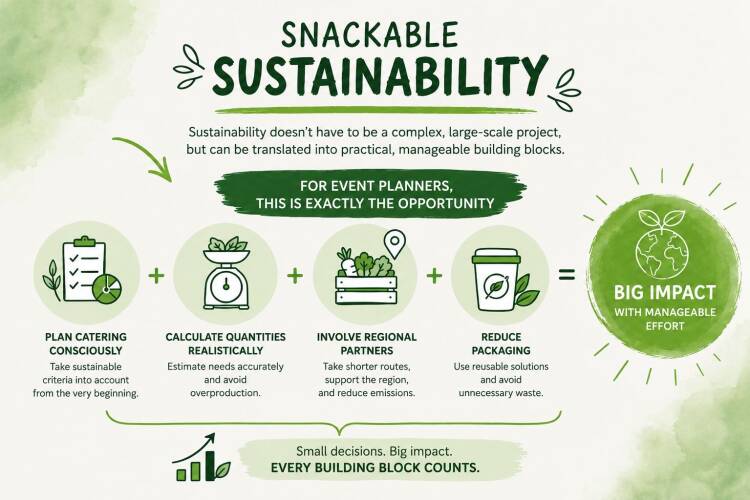
Image credit: AI-generated illustration (2026)
Less Packaging, More Experience
Single-use packaging and plastic portion packs can be avoided, at least in part, at many events. Reusable tableware, pitchers and glasses instead of individual bottles, reusable serving trays, or edible containers offer alternatives that not only reduce waste but can also be visually appealing. Presenting reusable solutions and unpackaged offerings in a high-quality way creates a cohesive and attractive overall look. Particularly with snacks, small dishes can be presented beautifully on platters, tiered serving stands, and in ceramic bowls.
Practical idea: A water station with herbs, citrus fruits, or berries replaces numerous individual containers while also looking inviting. Small dessert portions served in glasses instead of disposable cups are likewise easy to offer and look high-quality.
Many more sustainable solutions are easy to incorporate: reusable tableware, pitchers and glasses instead of individual bottles, water dispensers instead of individual containers, or napkins made from recycled material. Image: © Cateringmanufaktur
Small Steps That Send a Strong Message
Snackable Sustainability means viewing sustainability not as one large, complex project but as a series of small, meaningful, and manageable building blocks. For event planners, that is precisely where the opportunity lies. Those who plan catering deliberately, estimate quantities more realistically, involve regional partners, and reduce packaging can make a significant difference with manageable effort. These choices also add value to the overall event experience. Guests experience catering that feels more modern, lighter, and better thought-out. Sustainability thus becomes a natural part of a professional event culture.