Image © Oliver Wachenfeld
What Makes Events Truly Unforgettable
Goosebumps don’t happen at the push of a button. But event design can create the conditions for experiences to stay in people’s memories over the long term. | Image credit: AI-generated illustration (2026)

About the Interviewee:
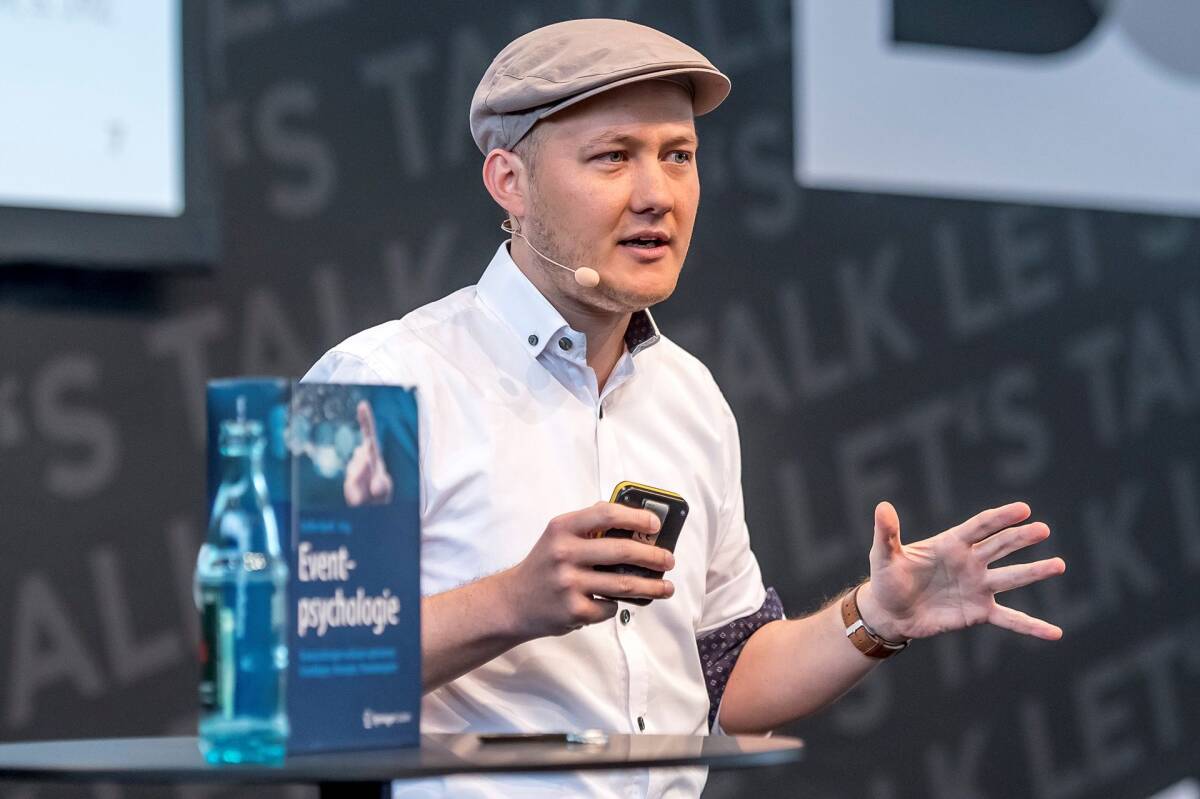
Prof. Dr. Steffen Ronft is the program director for BWL – Messe-, Kongress & Eventmanagement (Business Administration – Exhibition, Congress & Event Management) and the academic director of the Zentrum für empirische Kommunikationsforschung (ZEK; Center for Empirical Communication Research) at Duale Hochschule Baden-Württemberg Ravensburg (Baden-Württemberg Cooperative State University, Ravensburg). Alongside his main role, he works as a management consultant and speaker and is involved in continuing education for professionals. His research and areas of interest focus on bringing together psychology, management, and technological developments such as XR and AI in an interdisciplinary field of event psychology. As editor of the standard reference work of the same name, he is considered a pioneer in this field. He serves as a reviewer for academic journals such as the Journal of Marketing Communications, as jury president of the International Eventex Awards, and is active in industry networks such as the Verein zur Förderung der Sicherheit bei Großveranstaltungen (VFSG; Association for the Promotion of Safety at Large-Scale Events) and the Fachkreis Besuchersicherheit (Expert Group on Visitor Safety), as well as serving on the scientific advisory board of degefest e.V.
The event industry invests heavily in spectacular visuals, lighting, sound, and staging. But does spectacular automatically mean effective, or could less sometimes be more from a psychological perspective?
Prof. Dr. Steffen Ronft: Spectacle initially attracts attention, but that does not guarantee impact. When too many stimuli compete at once, the audience can become overwhelmed. Our cognitive ability to absorb information is at its best at a moderate level of arousal. If we are under-aroused—that is, sleepy, tired, or bored—or over-aroused—that is, overwhelmed, stressed, or even panicked—new content is no longer conveyed effectively. During the climax of a show, I should therefore refrain from conveying cognitive content.
Design becomes effective when it is easy to understand and consistent in content. Research refers to this as processing fluency: what people can process intuitively and effortlessly tends to be perceived more positively. Sometimes, therefore, a clear visual accent, a deliberate moment of calm, or a pared-back stage has a stronger impact than yet another escalation in technology or the next fireworks display.
You have studied the impact of physical and virtual spaces in depth. How strongly do spatial design, lighting, acoustics, wayfinding, or furnishings influence our behavior without our conscious awareness?
Prof. Dr. Steffen Ronft: Event spaces communicate before a single word is spoken. They convey orientation, safety, belonging, or distance. Clear wayfinding, good sightlines, and understandable signage reduce uncertainty. In my lectures, I discuss real event photos with my students, and we interpret the pictograms, labels, and color associations shown. The positive and negative effects, as well as the interpretations and misinterpretations that emerge, are always striking. This can also be dangerous, especially in safety-related communication. Confusing spaces and misleading or even contradictory visual cues can increase stress and cognitive load.
Colors, shapes, and lighting also influence our perception. Lighting is not just decoration: it shapes atmosphere and concentration and, depending on the type of event, can support different effects—from immersion in entertainment to focus at congresses and openness to encounters at industry events. The same principle applies in three-dimensional space: design has an impact, and in my view, organizers have a responsibility to implement it in ways that are psychologically and physiologically beneficial to their guests.
Many people attend trade shows and events primarily for in-person encounters. Can good networking actually be designed, and what mistakes do organizers still commonly make today?
Prof. Dr. Steffen Ronft: Networking cannot be mandated, but it can be made significantly easier from a psychological perspective. People need opportunities, guidance, and low-barrier ways to start conversations. Small thematic groups, moderated discussion formats, shared tasks, or curated contact suggestions can be more effective than an unstructured break with standing tables.
A common mistake is underestimating social dynamics. People take their cues from existing groups and from behavior that is visibly accepted—the relevant concepts are in-group bias and the social proof effect. Good networking formats therefore make it easy to initiate contact without making it seem awkward or intrusive. Referring back to the previous question, lighting, seating arrangements, and spatial transitions can further encourage this openness.
AI is now making its way into almost every area of event planning and promises to tailor events ever more closely to individual attendees. Does artificial intelligence actually make events more personal and relevant, or is increasing personalization causing us to lose the shared experience?
Prof. Dr. Steffen Ronft: AI can make events more relevant to individuals, for example through personalized program recommendations, better wayfinding, more accessible information, or suitable contact suggestions. This is particularly helpful when participants in complex event formats can quickly identify what is relevant to them.
At the same time, personalization must not leave each person confined to their own curated world of experiences. Events thrive on shared moments, chance occurrences, and perspectives that sometimes lie outside our own expectations. AI should therefore not only cater to individual preferences, but also facilitate encounters and shared points of reference. Especially in digital and hybrid formats, it is important to make participation visible—for example, through live polls, visualizations, or visible reactions from the virtual audience. This feedback strengthens the feeling of genuinely having an influence on what is happening.
Combining data with psychological mechanisms makes it possible to influence behavior in increasingly targeted ways. For you, where does good event design end and manipulation begin?
Prof. Dr. Steffen Ronft: A stimulating discussion of the concept of manipulation is an essential part of every one of my event psychology seminars. Manipulation primarily refers to covert influence intended to achieve specific goals. Whether those goals ultimately serve the interests of the guest, the organizer, other stakeholders, or several parties is not typically part of the definition.
In public discourse, the concept of nudging developed by Thaler and Sunstein has become established as an interesting approach in behavioral economics. If we design an event buffet to encourage guests—or, to stay with the nudging metaphor, to “nudge” them—to eat more locally grown vegetables instead of Argentine beef steak, that is certainly a form of covert influence. At the same time, however, it can also serve the interests of guests’ health, the environment, my event’s environmental footprint, and my catering budget.
As you can see, the line is not so easy to draw, because we quickly find ourselves in an ethical discussion about who actually sets these goals. If I offer plain tap water in an attractive carafe, the framing effect gives us a scientific basis for expecting guests to subjectively rate its taste more favorably than if they drew it themselves at the sink. I can view this as a service to improve the visitor experience—or, given the low purchase price of tap water, use it to maximize profit. In a sense, event design always involves exerting influence. The crucial question, therefore, is: For whose benefit is it being used?
A new generation of event attendees has grown up with personalized feeds, digital worlds, and constant availability. What do they expect from live events today—and which traditional event concepts might no longer resonate with them?
Prof. Dr. Steffen Ronft: Many younger participants do not simply expect more technology, but more relevance, participation, and credibility. They want to understand why their investment of time is worthwhile, because numerous alternative activities compete for their limited attention. An event must not feel interchangeable and, ideally, should trigger FOMO—that is, the “fear of missing out.” Traditional one-way formats without interaction are therefore losing their appeal. At the same time, it is a mistake to conclude that everything must be digital, gamified, or constantly personalized. Many well-intentioned choices offered in the name of personalization can also be overwhelming—the paradox of choice comes into play. In the worst case, this leads to what are known as approach-approach conflicts: for example, when two interesting workshops that someone wants to attend both take place at the same time. Good formats provide guidance without leaving people to choose among too many similarly attractive options.
Despite digitalization, AI, and virtual worlds, we continue to see a strong need for live encounters. What can a physical event offer psychologically that no screen or AI can replace?
Prof. Dr. Steffen Ronft: Physical events create social presence. We experience not only content, but also body language, eye contact, atmosphere, multisensory stimuli engaging all our senses, movement, and the spontaneous reactions of real people. This simultaneity creates a sense of shared reality.
Digital formats can support reach, flexibility, and interactivity very effectively. However, they cannot fully replace in-person encounters, because it is precisely the unplanned and immediate elements that make a live event unique and often give it its particular value: the chance conversation, the collective applause, the expectant silence, or the emotional resonance in the room.
Looking five years ahead, what does a truly good event of the future look like to you, and which development that is widely discussed today do you think is significantly overrated?
Prof. Dr. Steffen Ronft: A good event of the future will be technologically intelligent, but not overloaded with technology. AI, interactive systems, and immersive applications can improve wayfinding, accessibility, and participation. However, people, content, and genuine social connections should remain at the center.
What is overrated is the assumption that new technology is already an experience in itself. A novel application can attract attention, but it cannot replace relevance and authentic encounters. I remember a time when many trade show exhibitors wanted to use AR and VR headsets—not because they fit their message or offered real added value, but for the sake of the technology itself. For the very first movers, this may work briefly, but the effect quickly wears off. As fascinating and tempting as new technologies may be, in-person events should always center on the crucial question: Why does it make sense to come together physically for this, and why is doing so irreplaceable?
People today do not travel hundreds of kilometers to a trade show to put on a VR headset for a virtual venue tour. They come to interact with real people, to build knowledge and networks, and, ideally, to have a congruent multisensory experience that meaningfully combines emotional and cognitive content. Unlike in other industries, such as large parts of retail, the human factor will remain the key determinant at events. In all our discussions about technology, we should not lose sight of this fact, which is inherent in the nature of events.
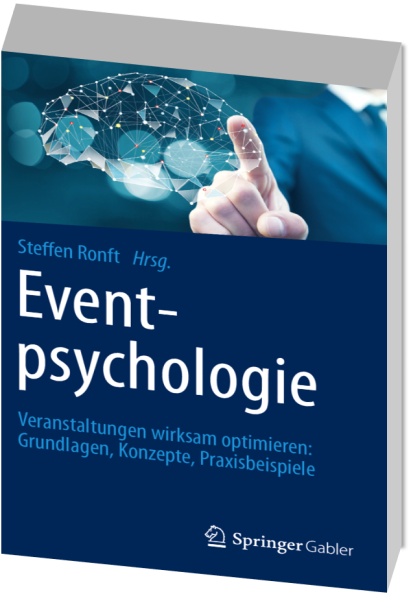
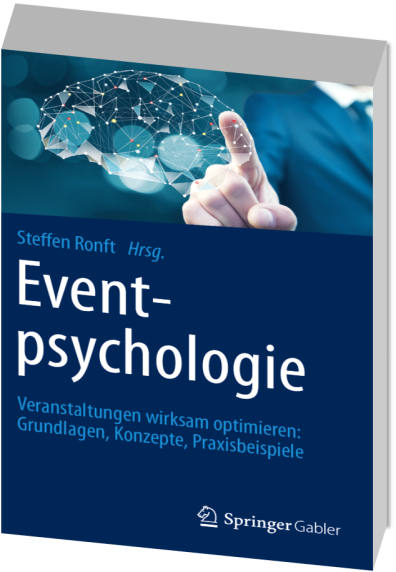
The book “Eventpsychologie – Veranstaltungen wirksam optimieren” (Event Psychology – Optimizing Events Effectively) shows how psychological insights can be specifically applied to events—from experience design and multisensory engagement through neuroscience and event management to safety and different event formats. Around 60 experts combine scientific foundations with concrete examples from practice. The book thus offers a comprehensive introduction to event psychology and shows how events can be designed to be more effective, more compelling, and more sustainable. (Order from Springer Gabler)
Why do some events stay with us for years, while others fade even on the way home? Prof. Dr. Steffen Ronft looks at events through a lens that is becoming more important than ever in an era of AI, immersion, and all-out staging: the psychology of experience. In an interview with boe international, he discusses how spaces and encounters shape our behavior, why spectacular does not automatically mean effective, and where personalization can tip into manipulation. He also addresses what may be the crucial question for the future of live communication: What can a genuine shared experience offer that no algorithm can replace?
Mr. Ronft, you conduct scientific research on the impact of events. From a psychological perspective, what distinguishes an event we simply attend from one we still remember years later?
Prof. Dr. Steffen Ronft: Memorable events create personal significance. People do not remember every detail of a program, but primarily its emotional highlights, social moments, and the conclusion of an experience. In psychology, this is described by the primacy-recency effect and the peak-end rule: the beginning, the end, and particularly intense moments have a disproportionately strong influence on our overall retrospective assessment.
Unusual experiences also leave a stronger impression. An unexpected shift in perspective, a quiet moment in the midst of a loud production, or a surprising encounter can have a more lasting impact than a program that is spectacular from start to finish. What matters is not the quantity of stimuli, but their significance to participants. The Restorff effect describes precisely this enhanced recall of distinctiveness and visually striking stimuli. A more extreme form of content design that goes beyond what is expected would be the bizarreness effect, which is also associated with improved recall.
Can emotions such as enthusiasm, a sense of connection, or even goosebumps be deliberately planned, or is that precisely where the illusion of a perfect production begins?
Prof. Dr. Steffen Ronft: Emotions cannot be produced at will, but the conditions under which they arise can be shaped. Key factors include, for example, relevance, social resonance, multisensory engagement, and a high level of involvement—in other words, being part of the action yourself. A production can therefore open up emotional possibilities, but it cannot guarantee an authentic response.
Lighting, images, music, and spatial dramaturgy can, for example, create tension or a sense of closeness. But they cannot replace meaningful content. Goosebumps are more likely when a production feels authentic and people can establish a personal or shared connection. Good event design therefore does not try to force feelings, but creates spaces in which they can arise. Event psychology provides the knowledge needed to increase the likelihood of the desired emotions.
Image © Oliver Wachenfeld
Goosebumps don’t happen at the push of a button. But event design can create the conditions for experiences to stay in people’s memories over the long term. | Image credit: AI-generated illustration (2026)
What Makes Events Truly Unforgettable
Why do some events stay with us for years, while others fade even on the way home? Prof. Dr. Steffen Ronft looks at events through a lens that is becoming more important than ever in an era of AI, immersion, and all-out staging: the psychology of experience. In an interview with boe international, he discusses how spaces and encounters shape our behavior, why spectacular does not automatically mean effective, and where personalization can tip into manipulation. He also addresses what may be the crucial question for the future of live communication: What can a genuine shared experience offer that no algorithm can replace?
Mr. Ronft, you conduct scientific research on the impact of events. From a psychological perspective, what distinguishes an event we simply attend from one we still remember years later?
Prof. Dr. Steffen Ronft: Memorable events create personal significance. People do not remember every detail of a program, but primarily its emotional highlights, social moments, and the conclusion of an experience. In psychology, this is described by the primacy-recency effect and the peak-end rule: the beginning, the end, and particularly intense moments have a disproportionately strong influence on our overall retrospective assessment.
Unusual experiences also leave a stronger impression. An unexpected shift in perspective, a quiet moment in the midst of a loud production, or a surprising encounter can have a more lasting impact than a program that is spectacular from start to finish. What matters is not the quantity of stimuli, but their significance to participants. The Restorff effect describes precisely this enhanced recall of distinctiveness and visually striking stimuli. A more extreme form of content design that goes beyond what is expected would be the bizarreness effect, which is also associated with improved recall.
Can emotions such as enthusiasm, a sense of connection, or even goosebumps be deliberately planned, or is that precisely where the illusion of a perfect production begins?
Prof. Dr. Steffen Ronft: Emotions cannot be produced at will, but the conditions under which they arise can be shaped. Key factors include, for example, relevance, social resonance, multisensory engagement, and a high level of involvement—in other words, being part of the action yourself. A production can therefore open up emotional possibilities, but it cannot guarantee an authentic response.
Lighting, images, music, and spatial dramaturgy can, for example, create tension or a sense of closeness. But they cannot replace meaningful content. Goosebumps are more likely when a production feels authentic and people can establish a personal or shared connection. Good event design therefore does not try to force feelings, but creates spaces in which they can arise. Event psychology provides the knowledge needed to increase the likelihood of the desired emotions.

The event industry invests heavily in spectacular visuals, lighting, sound, and staging. But does spectacular automatically mean effective, or could less sometimes be more from a psychological perspective?
Prof. Dr. Steffen Ronft: Spectacle initially attracts attention, but that does not guarantee impact. When too many stimuli compete at once, the audience can become overwhelmed. Our cognitive ability to absorb information is at its best at a moderate level of arousal. If we are under-aroused—that is, sleepy, tired, or bored—or over-aroused—that is, overwhelmed, stressed, or even panicked—new content is no longer conveyed effectively. During the climax of a show, I should therefore refrain from conveying cognitive content.
Design becomes effective when it is easy to understand and consistent in content. Research refers to this as processing fluency: what people can process intuitively and effortlessly tends to be perceived more positively. Sometimes, therefore, a clear visual accent, a deliberate moment of calm, or a pared-back stage has a stronger impact than yet another escalation in technology or the next fireworks display.
You have studied the impact of physical and virtual spaces in depth. How strongly do spatial design, lighting, acoustics, wayfinding, or furnishings influence our behavior without our conscious awareness?
Prof. Dr. Steffen Ronft: Event spaces communicate before a single word is spoken. They convey orientation, safety, belonging, or distance. Clear wayfinding, good sightlines, and understandable signage reduce uncertainty. In my lectures, I discuss real event photos with my students, and we interpret the pictograms, labels, and color associations shown. The positive and negative effects, as well as the interpretations and misinterpretations that emerge, are always striking. This can also be dangerous, especially in safety-related communication. Confusing spaces and misleading or even contradictory visual cues can increase stress and cognitive load.
Colors, shapes, and lighting also influence our perception. Lighting is not just decoration: it shapes atmosphere and concentration and, depending on the type of event, can support different effects—from immersion in entertainment to focus at congresses and openness to encounters at industry events. The same principle applies in three-dimensional space: design has an impact, and in my view, organizers have a responsibility to implement it in ways that are psychologically and physiologically beneficial to their guests.
Many people attend trade shows and events primarily for in-person encounters. Can good networking actually be designed, and what mistakes do organizers still commonly make today?
Prof. Dr. Steffen Ronft: Networking cannot be mandated, but it can be made significantly easier from a psychological perspective. People need opportunities, guidance, and low-barrier ways to start conversations. Small thematic groups, moderated discussion formats, shared tasks, or curated contact suggestions can be more effective than an unstructured break with standing tables.
A common mistake is underestimating social dynamics. People take their cues from existing groups and from behavior that is visibly accepted—the relevant concepts are in-group bias and the social proof effect. Good networking formats therefore make it easy to initiate contact without making it seem awkward or intrusive. Referring back to the previous question, lighting, seating arrangements, and spatial transitions can further encourage this openness.
AI is now making its way into almost every area of event planning and promises to tailor events ever more closely to individual attendees. Does artificial intelligence actually make events more personal and relevant, or is increasing personalization causing us to lose the shared experience?
Prof. Dr. Steffen Ronft: AI can make events more relevant to individuals, for example through personalized program recommendations, better wayfinding, more accessible information, or suitable contact suggestions. This is particularly helpful when participants in complex event formats can quickly identify what is relevant to them.
At the same time, personalization must not leave each person confined to their own curated world of experiences. Events thrive on shared moments, chance occurrences, and perspectives that sometimes lie outside our own expectations. AI should therefore not only cater to individual preferences, but also facilitate encounters and shared points of reference. Especially in digital and hybrid formats, it is important to make participation visible—for example, through live polls, visualizations, or visible reactions from the virtual audience. This feedback strengthens the feeling of genuinely having an influence on what is happening.
Combining data with psychological mechanisms makes it possible to influence behavior in increasingly targeted ways. For you, where does good event design end and manipulation begin?
Prof. Dr. Steffen Ronft: A stimulating discussion of the concept of manipulation is an essential part of every one of my event psychology seminars. Manipulation primarily refers to covert influence intended to achieve specific goals. Whether those goals ultimately serve the interests of the guest, the organizer, other stakeholders, or several parties is not typically part of the definition.
In public discourse, the concept of nudging developed by Thaler and Sunstein has become established as an interesting approach in behavioral economics. If we design an event buffet to encourage guests—or, to stay with the nudging metaphor, to “nudge” them—to eat more locally grown vegetables instead of Argentine beef steak, that is certainly a form of covert influence. At the same time, however, it can also serve the interests of guests’ health, the environment, my event’s environmental footprint, and my catering budget.
As you can see, the line is not so easy to draw, because we quickly find ourselves in an ethical discussion about who actually sets these goals. If I offer plain tap water in an attractive carafe, the framing effect gives us a scientific basis for expecting guests to subjectively rate its taste more favorably than if they drew it themselves at the sink. I can view this as a service to improve the visitor experience—or, given the low purchase price of tap water, use it to maximize profit. In a sense, event design always involves exerting influence. The crucial question, therefore, is: For whose benefit is it being used?
A new generation of event attendees has grown up with personalized feeds, digital worlds, and constant availability. What do they expect from live events today—and which traditional event concepts might no longer resonate with them?
Prof. Dr. Steffen Ronft: Many younger participants do not simply expect more technology, but more relevance, participation, and credibility. They want to understand why their investment of time is worthwhile, because numerous alternative activities compete for their limited attention. An event must not feel interchangeable and, ideally, should trigger FOMO—that is, the “fear of missing out.” Traditional one-way formats without interaction are therefore losing their appeal. At the same time, it is a mistake to conclude that everything must be digital, gamified, or constantly personalized. Many well-intentioned choices offered in the name of personalization can also be overwhelming—the paradox of choice comes into play. In the worst case, this leads to what are known as approach-approach conflicts: for example, when two interesting workshops that someone wants to attend both take place at the same time. Good formats provide guidance without leaving people to choose among too many similarly attractive options.
Despite digitalization, AI, and virtual worlds, we continue to see a strong need for live encounters. What can a physical event offer psychologically that no screen or AI can replace?
Prof. Dr. Steffen Ronft: Physical events create social presence. We experience not only content, but also body language, eye contact, atmosphere, multisensory stimuli engaging all our senses, movement, and the spontaneous reactions of real people. This simultaneity creates a sense of shared reality.
Digital formats can support reach, flexibility, and interactivity very effectively. However, they cannot fully replace in-person encounters, because it is precisely the unplanned and immediate elements that make a live event unique and often give it its particular value: the chance conversation, the collective applause, the expectant silence, or the emotional resonance in the room.
Looking five years ahead, what does a truly good event of the future look like to you, and which development that is widely discussed today do you think is significantly overrated?
Prof. Dr. Steffen Ronft: A good event of the future will be technologically intelligent, but not overloaded with technology. AI, interactive systems, and immersive applications can improve wayfinding, accessibility, and participation. However, people, content, and genuine social connections should remain at the center.
What is overrated is the assumption that new technology is already an experience in itself. A novel application can attract attention, but it cannot replace relevance and authentic encounters. I remember a time when many trade show exhibitors wanted to use AR and VR headsets—not because they fit their message or offered real added value, but for the sake of the technology itself. For the very first movers, this may work briefly, but the effect quickly wears off. As fascinating and tempting as new technologies may be, in-person events should always center on the crucial question: Why does it make sense to come together physically for this, and why is doing so irreplaceable?
People today do not travel hundreds of kilometers to a trade show to put on a VR headset for a virtual venue tour. They come to interact with real people, to build knowledge and networks, and, ideally, to have a congruent multisensory experience that meaningfully combines emotional and cognitive content. Unlike in other industries, such as large parts of retail, the human factor will remain the key determinant at events. In all our discussions about technology, we should not lose sight of this fact, which is inherent in the nature of events.
About the Interviewee:
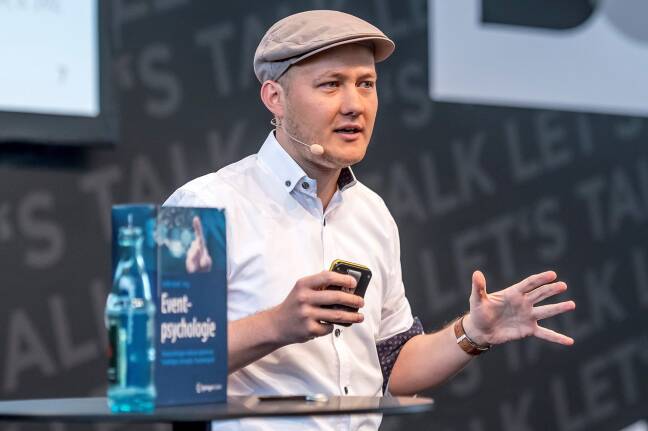
Prof. Dr. Steffen Ronft is the program director for BWL – Messe-, Kongress & Eventmanagement (Business Administration – Exhibition, Congress & Event Management) and the academic director of the Zentrum für empirische Kommunikationsforschung (ZEK; Center for Empirical Communication Research) at Duale Hochschule Baden-Württemberg Ravensburg (Baden-Württemberg Cooperative State University, Ravensburg). Alongside his main role, he works as a management consultant and speaker and is involved in continuing education for professionals. His research and areas of interest focus on bringing together psychology, management, and technological developments such as XR and AI in an interdisciplinary field of event psychology. As editor of the standard reference work of the same name, he is considered a pioneer in this field. He serves as a reviewer for academic journals such as the Journal of Marketing Communications, as jury president of the International Eventex Awards, and is active in industry networks such as the Verein zur Förderung der Sicherheit bei Großveranstaltungen (VFSG; Association for the Promotion of Safety at Large-Scale Events) and the Fachkreis Besuchersicherheit (Expert Group on Visitor Safety), as well as serving on the scientific advisory board of degefest e.V.
The book “Eventpsychologie – Veranstaltungen wirksam optimieren” (Event Psychology – Optimizing Events Effectively) shows how psychological insights can be specifically applied to events—from experience design and multisensory engagement through neuroscience and event management to safety and different event formats. Around 60 experts combine scientific foundations with concrete examples from practice. The book thus offers a comprehensive introduction to event psychology and shows how events can be designed to be more effective, more compelling, and more sustainable. (Order from Springer Gabler)