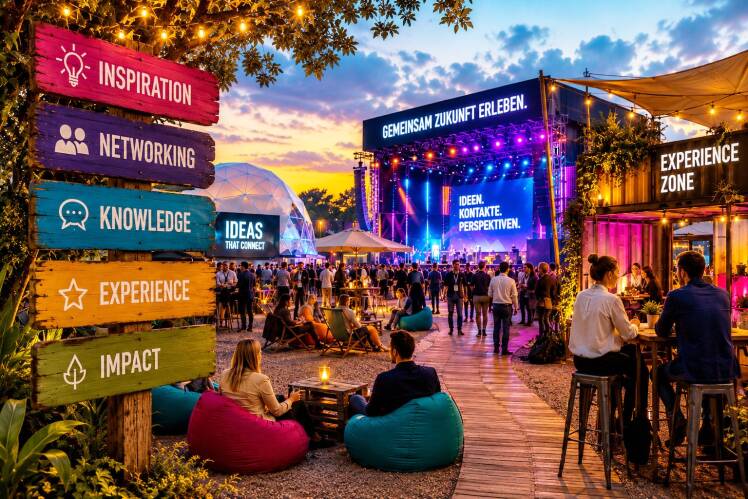
Image created with AI
The discount code boe 2027 provides a 10% discount on all degree programs and continuing education courses in Communication & Business at the IST University of Applied Sciences and the IST Study Institute.
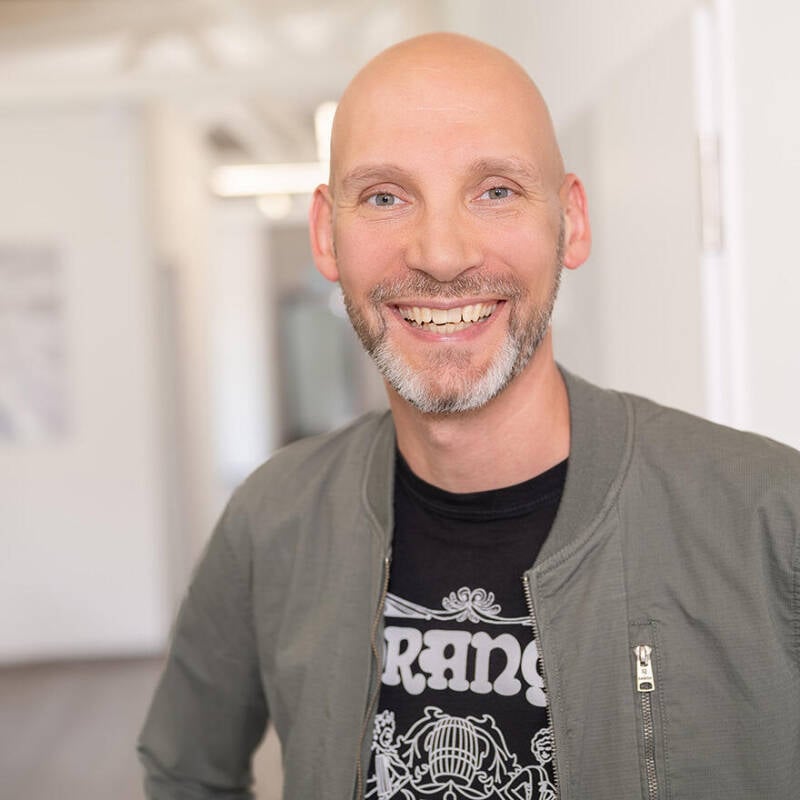
Prof. Dr. Matthias Johannes Bauer has headed the master’s degree program in Communication Management since 2018 and serves as Vice Dean of the Department of Communication & Business at the IST University of Applied Sciences. His areas of expertise are strategic communication, sustainability communication, and festival management.
As an author, journalist, keynote speaker, and consultant, the recognized festival expert combines academic research with many years of industry experience. He is a member of the Professorial Board of the Centre for Events and Festivals in Cambridge and served as a juror for the HELGA! Festival Award in 2025. He was also involved in developing the “Blue Angel for events” ecolabel.
Festivalization is far more than a design trend. It requires clear concepts, sound expertise, and professionals who can bring experience, safety, communications, and commercial viability together.
© IST
Between Experience and Strategy:
What Festivalization Means for the Event Industry
What can trade fairs and corporate events learn from music festivals, and which festival mechanisms cannot readily be transferred to business events?
M.J. Bauer: First and foremost, business events can learn that people do not attend solely for individual program elements. Successful music festivals are, of course, about the bands, but not only about them. Otherwise, many festivals would not sell out before the first bands are even announced. They are also about atmosphere, community, personal interaction, and the feeling of being part of something special for a time. This can certainly be applied to trade fairs, congresses, and other corporate events. For example, organizers can make greater use of parallel formats, smaller stages, workshops, discussion sessions, open networking areas, or places to retreat. Not every attendee has to experience the same thing at the same time.
Dramaturgy is another important factor. Good festivals are not simply a succession of program elements. They feature dramatic arcs, highlights, surprises, and quieter phases. At many congresses or trade fairs, by contrast, we still see an eight-hour program in relatively uniform rooms or halls.
However, the basic parameters of a festival cannot simply be transferred one-to-one to business events. A corporate event generally has specific information, sales, or training objectives; it takes place during working hours, not leisure time. At the end, attendees should not merely say, “The atmosphere was great!” The event must also deliver professional or commercial value. That is why not every congress needs DJs, street food, and lounge chairs. What matters is not a visible “festival look,” but the question: Which mechanisms genuinely fit my objective and my target audience?
Festivalized events give attendees more choice and freedom, but they also increase organizational complexity. What skills do event professionals need today to bring together programming, technology, attendee flows, communications, and commercial viability?
M.J. Bauer: Well, in my view, the two are not all that different in these respects, because professionals are at work in both settings. Overall, perhaps what is needed is more creativity and an even sharper understanding of target audiences and dramaturgy.
When applying festivalization to a business event, an even stronger focus on attendees is essential. More stages, more spaces, and more choices do not automatically create a better experience. They can also be overwhelming. Attendees need clarity and guidance, and they need to understand: What is happening, when, and where? How do I get there? What is relevant to me? And where can I find help if something is not working or I feel uncomfortable?
Your new edited volume shows that people’s subjective sense of safety depends heavily on perception, communication, and the specific design of awareness measures. Why must safety and awareness be part of the event concept from the outset when applying festivalization?
M.J. Bauer: Quite simply, because I cannot bolt safety and awareness onto a completed event after the fact. The same applies to festivals themselves and festivalized large-scale events. Once the spatial concept, visitor routing, communications, and staffing have already been planned, it is essentially too late to integrate these issues in a meaningful way.
Festivalized events in particular give attendees a great deal of freedom. They offer different spaces, parallel activities, changing atmospheres, and many personal encounters. On the one hand, that is their great strength. On the other, situations can arise more quickly in which people become disoriented, feel uncomfortable, or need support. That is why the following questions must be asked from the outset: Where could bottlenecks arise? Which areas have limited visibility? Where are places to retreat? How can attendees reach a support point? And does every staff member know what to do in a difficult situation?
When it comes to awareness, it is not enough to communicate a “code word” and put up a few posters. A functioning concept requires a clear stance, trained staff, defined responsibilities, transparent procedures, and easily accessible support points.
Another important finding from the studies in our edited volume is that simply having an awareness measure in place does not automatically make everyone feel safer. What matters is whether the concept is understandable, visible, credible, and implemented consistently. Safety and freedom are not opposites. On the contrary, people can only truly enjoy freedom when they can trust that reliable structures are in place behind the scenes.
Festivalization can make events more emotional, interactive, and experience-driven, while also increasing the demands placed on concept development, organization, and delivery. Prof. Dr. Matthias Johannes Bauer of the IST University of Applied Sciences explains what lies behind the approach, the opportunities and limits it presents, and the skills the event industry will need in the future.
Many event decisions are still based primarily on experience and gut instinct. How can research findings be transferred into practice more quickly, and what role do universities play in this process?
M.J. Bauer: First of all, I do not want to dismiss gut instinct. The event industry has a wealth of valuable experience-based knowledge. Over the years, many event professionals have developed a very good sense of what works and what does not.
It becomes problematic when a single experience is treated as a universal truth. Just because something worked at one event does not mean it will work equally well for a different audience, in a different location, or in a different year. This is precisely where research can help. It can test assumptions, distinguish between audiences, and reveal connections. Sometimes it confirms experience. Sometimes, however, it shows that things have a different effect than expected—or that reality is entirely different from what we assume.
At the IST University of Applied Sciences, we regularly work with industry partners. Students investigate real-world questions, conduct surveys, interviews, or media analyses, and develop concrete recommendations for action. This is valuable for both sides: organizers gain new insights, while students learn about research not only in theory, but through real-world problems.
As a university, we can serve as an independent, objective educational partner. Our role is not always to reassure practitioners that they are doing everything right. The true value of that role also lies in questioning established routines and accepting findings that may not align with the original expectations.
Anyone seeking to implement festivalization professionally must now consider dramaturgy, commercial viability, communications, sustainability, and safety at the same time. How does the IST University of Applied Sciences address this skills profile in its degree programs and its University Certificate in Festival Management? Which working professionals or companies is this offering particularly relevant to?
M.J. Bauer: We aim to reflect precisely this interdisciplinary skills profile. Festival management, as a field within event management, cannot operate in separate silos. Creativity, commercial viability, communication, safety, and sustainability ultimately have to be brought together and work in concert.
The bachelor’s degree program in “Communication & Event Management” combines business fundamentals with event concept development, communication, marketing, and project management. In the master’s degree program in “Communication Management”, students can explore strategic questions in event and festival management in greater depth, among other topics. Further elective modules may also address major sporting events or international event management.
The university also offers the “Festival Management” University Certificate. It is designed specifically for people who already hold at least a bachelor’s degree, are currently employed, and want to gain targeted further qualifications in this field over two semesters.
The certificate course covers key management topics ranging from agency management and, where relevant, starting your own business to sustainability management, international event management, and the distinctive features of festival management. It is relevant, for example, to employees of festival and concert organizers, event agencies, trade fair companies, venues, cultural institutions, and city marketing organizations, as well as professionals working in tourism and municipalities. Companies seeking to develop their own event formats can also benefit.
Practical experience is not required, but many participants already bring a great deal of it. That provides a strong basis. We then help them systematize this experience-based knowledge, add further perspectives, and ground it in research. Exchange and networking are almost a constant background hum. After all, it brings together people—participants and instructors alike—who want to understand complex interrelationships and turn creative ideas into practice professionally, commercially, and responsibly.
What defines a festivalized event, and how does it differ from a traditional event that merely incorporates individual entertainment elements?
M.J. Bauer: To begin with, the term festivalization is now applied very readily—and increasingly loosely. But an event is not festivalized simply because a DJ is playing somewhere at a trade fair or event, a food truck is on site, or a band performs between two presentations. Those are merely additional entertainment or staging elements.
I would speak of festivalization when the logic of the entire event changes and comes to resemble that of music festivals. Traditional MICE formats are often highly linear. They follow a prescribed sequence that essentially all attendees move through together, more or less. By contrast, a festivalized format is defined above all by one thing: simultaneity. That is the crucial point. Festivalization does not simply mean more entertainment or eventization taken to the next level. It stands for greater autonomy, more parallel programming, and a different dramaturgy. At its best, it creates a distinct experiential world in which information, personal interaction, entertainment, and atmosphere come together.
But this has to be approached strategically. If I merely copy a few festival elements, the result remains a traditional event with a few decorative flourishes. A genuinely festivalized event, by contrast, changes the program, spatial planning, communications, catering, safety, and often even the business model. This means that the event industry and the experience economy must come together here in a meaningful and effective way.
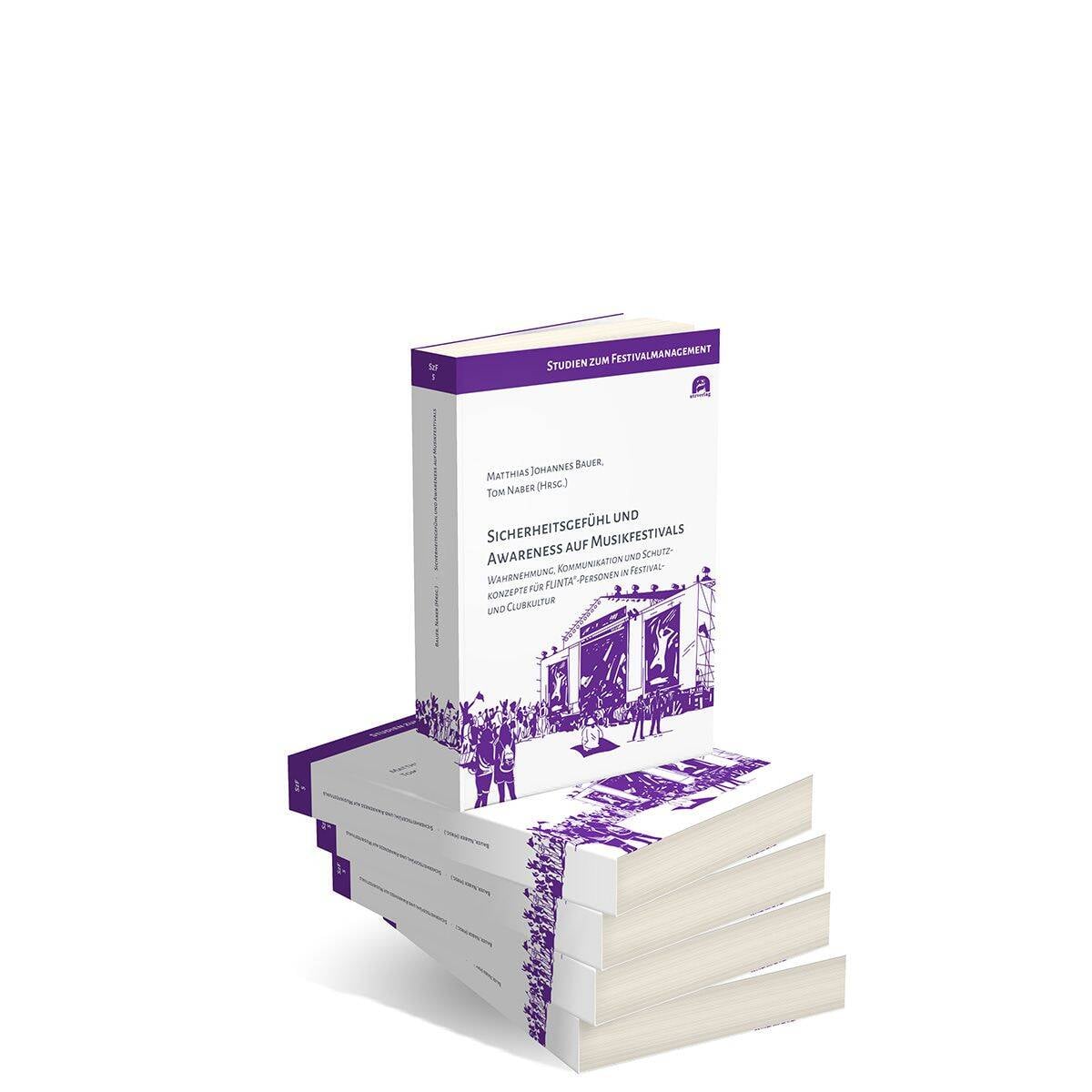
The edited volume “Perceived Safety and Awareness at Music Festivals” brings together four empirical studies on safeguarding concepts, communication, and awareness work. Edited by Prof. Dr. Matthias Johannes Bauer and Tom Naber, it provides research-based insights for festival practice, club culture, and event management.
Image: © utzverlag
Many event decisions are still based primarily on experience and gut instinct. How can research findings be transferred into practice more quickly, and what role do universities play in this process?
M.J. Bauer: First of all, I do not want to dismiss gut instinct. The event industry has a wealth of valuable experience-based knowledge. Over the years, many event professionals have developed a very good sense of what works and what does not.
It becomes problematic when a single experience is treated as a universal truth. Just because something worked at one event does not mean it will work equally well for a different audience, in a different location, or in a different year. This is precisely where research can help. It can test assumptions, distinguish between audiences, and reveal connections. Sometimes it confirms experience. Sometimes, however, it shows that things have a different effect than expected—or that reality is entirely different from what we assume.
At the IST University of Applied Sciences, we regularly work with industry partners. Students investigate real-world questions, conduct surveys, interviews, or media analyses, and develop concrete recommendations for action. This is valuable for both sides: organizers gain new insights, while students learn about research not only in theory, but through real-world problems.
As a university, we can serve as an independent, objective educational partner. Our role is not always to reassure practitioners that they are doing everything right. The true value of that role also lies in questioning established routines and accepting findings that may not align with the original expectations.
Anyone seeking to implement festivalization professionally must now consider dramaturgy, commercial viability, communications, sustainability, and safety at the same time. How does the IST University of Applied Sciences address this skills profile in its degree programs and its University Certificate in Festival Management? Which working professionals or companies is this offering particularly relevant to?
M.J. Bauer: We aim to reflect precisely this interdisciplinary skills profile. Festival management, as a field within event management, cannot operate in separate silos. Creativity, commercial viability, communication, safety, and sustainability ultimately have to be brought together and work in concert.
The bachelor’s degree program in “Communication & Event Management” combines business fundamentals with event concept development, communication, marketing, and project management. In the master’s degree program in “Communication Management”, students can explore strategic questions in event and festival management in greater depth, among other topics. Further elective modules may also address major sporting events or international event management.
The university also offers the “Festival Management” University Certificate. It is designed specifically for people who already hold at least a bachelor’s degree, are currently employed, and want to gain targeted further qualifications in this field over two semesters.
The certificate course covers key management topics ranging from agency management and, where relevant, starting your own business to sustainability management, international event management, and the distinctive features of festival management. It is relevant, for example, to employees of festival and concert organizers, event agencies, trade fair companies, venues, cultural institutions, and city marketing organizations, as well as professionals working in tourism and municipalities. Companies seeking to develop their own event formats can also benefit.
Practical experience is not required, but many participants already bring a great deal of it. That provides a strong basis. We then help them systematize this experience-based knowledge, add further perspectives, and ground it in research. Exchange and networking are almost a constant background hum. After all, it brings together people—participants and instructors alike—who want to understand complex interrelationships and turn creative ideas into practice professionally, commercially, and responsibly.
The edited volume “Perceived Safety and Awareness at Music Festivals” brings together four empirical studies on safeguarding concepts, communication, and awareness work. Edited by Prof. Dr. Matthias Johannes Bauer and Tom Naber, it provides research-based insights for festival practice, club culture, and event management.
Image: © utzverlag
© IST
Between Experience and Strategy:
What Festivalization Means for the Event Industry
What can trade fairs and corporate events learn from music festivals, and which festival mechanisms cannot readily be transferred to business events?
M.J. Bauer: First and foremost, business events can learn that people do not attend solely for individual program elements. Successful music festivals are, of course, about the bands, but not only about them. Otherwise, many festivals would not sell out before the first bands are even announced. They are also about atmosphere, community, personal interaction, and the feeling of being part of something special for a time. This can certainly be applied to trade fairs, congresses, and other corporate events. For example, organizers can make greater use of parallel formats, smaller stages, workshops, discussion sessions, open networking areas, or places to retreat. Not every attendee has to experience the same thing at the same time.
Dramaturgy is another important factor. Good festivals are not simply a succession of program elements. They feature dramatic arcs, highlights, surprises, and quieter phases. At many congresses or trade fairs, by contrast, we still see an eight-hour program in relatively uniform rooms or halls.
However, the basic parameters of a festival cannot simply be transferred one-to-one to business events. A corporate event generally has specific information, sales, or training objectives; it takes place during working hours, not leisure time. At the end, attendees should not merely say, “The atmosphere was great!” The event must also deliver professional or commercial value. That is why not every congress needs DJs, street food, and lounge chairs. What matters is not a visible “festival look,” but the question: Which mechanisms genuinely fit my objective and my target audience?
What defines a festivalized event, and how does it differ from a traditional event that merely incorporates individual entertainment elements?
M.J. Bauer: To begin with, the term festivalization is now applied very readily—and increasingly loosely. But an event is not festivalized simply because a DJ is playing somewhere at a trade fair or event, a food truck is on site, or a band performs between two presentations. Those are merely additional entertainment or staging elements.
I would speak of festivalization when the logic of the entire event changes and comes to resemble that of music festivals. Traditional MICE formats are often highly linear. They follow a prescribed sequence that essentially all attendees move through together, more or less. By contrast, a festivalized format is defined above all by one thing: simultaneity. That is the crucial point. Festivalization does not simply mean more entertainment or eventization taken to the next level. It stands for greater autonomy, more parallel programming, and a different dramaturgy. At its best, it creates a distinct experiential world in which information, personal interaction, entertainment, and atmosphere come together.
But this has to be approached strategically. If I merely copy a few festival elements, the result remains a traditional event with a few decorative flourishes. A genuinely festivalized event, by contrast, changes the program, spatial planning, communications, catering, safety, and often even the business model. This means that the event industry and the experience economy must come together here in a meaningful and effective way.
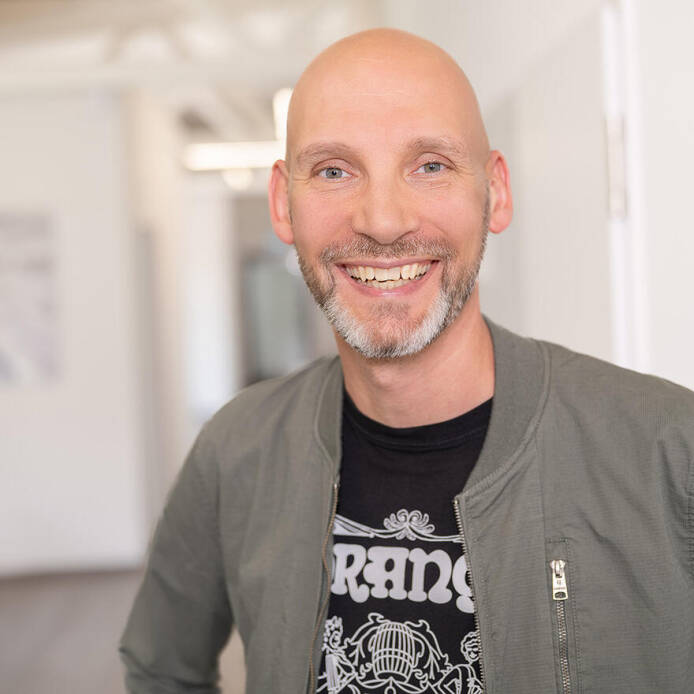
Prof. Dr. Matthias Johannes Bauer has headed the master’s degree program in Communication Management since 2018 and serves as Vice Dean of the Department of Communication & Business at the IST University of Applied Sciences. His areas of expertise are strategic communication, sustainability communication, and festival management.
As an author, journalist, keynote speaker, and consultant, the recognized festival expert combines academic research with many years of industry experience. He is a member of the Professorial Board of the Centre for Events and Festivals in Cambridge and served as a juror for the HELGA! Festival Award in 2025. He was also involved in developing the “Blue Angel for events” ecolabel.
Festivalized events give attendees more choice and freedom, but they also increase organizational complexity. What skills do event professionals need today to bring together programming, technology, attendee flows, communications, and commercial viability?
M.J. Bauer: Well, in my view, the two are not all that different in these respects, because professionals are at work in both settings. Overall, perhaps what is needed is more creativity and an even sharper understanding of target audiences and dramaturgy.
When applying festivalization to a business event, an even stronger focus on attendees is essential. More stages, more spaces, and more choices do not automatically create a better experience. They can also be overwhelming. Attendees need clarity and guidance, and they need to understand: What is happening, when, and where? How do I get there? What is relevant to me? And where can I find help if something is not working or I feel uncomfortable?
Your new edited volume shows that people’s subjective sense of safety depends heavily on perception, communication, and the specific design of awareness measures. Why must safety and awareness be part of the event concept from the outset when applying festivalization?
M.J. Bauer: Quite simply, because I cannot bolt safety and awareness onto a completed event after the fact. The same applies to festivals themselves and festivalized large-scale events. Once the spatial concept, visitor routing, communications, and staffing have already been planned, it is essentially too late to integrate these issues in a meaningful way.
Festivalized events in particular give attendees a great deal of freedom. They offer different spaces, parallel activities, changing atmospheres, and many personal encounters. On the one hand, that is their great strength. On the other, situations can arise more quickly in which people become disoriented, feel uncomfortable, or need support. That is why the following questions must be asked from the outset: Where could bottlenecks arise? Which areas have limited visibility? Where are places to retreat? How can attendees reach a support point? And does every staff member know what to do in a difficult situation?
When it comes to awareness, it is not enough to communicate a “code word” and put up a few posters. A functioning concept requires a clear stance, trained staff, defined responsibilities, transparent procedures, and easily accessible support points.
Another important finding from the studies in our edited volume is that simply having an awareness measure in place does not automatically make everyone feel safer. What matters is whether the concept is understandable, visible, credible, and implemented consistently. Safety and freedom are not opposites. On the contrary, people can only truly enjoy freedom when they can trust that reliable structures are in place behind the scenes.
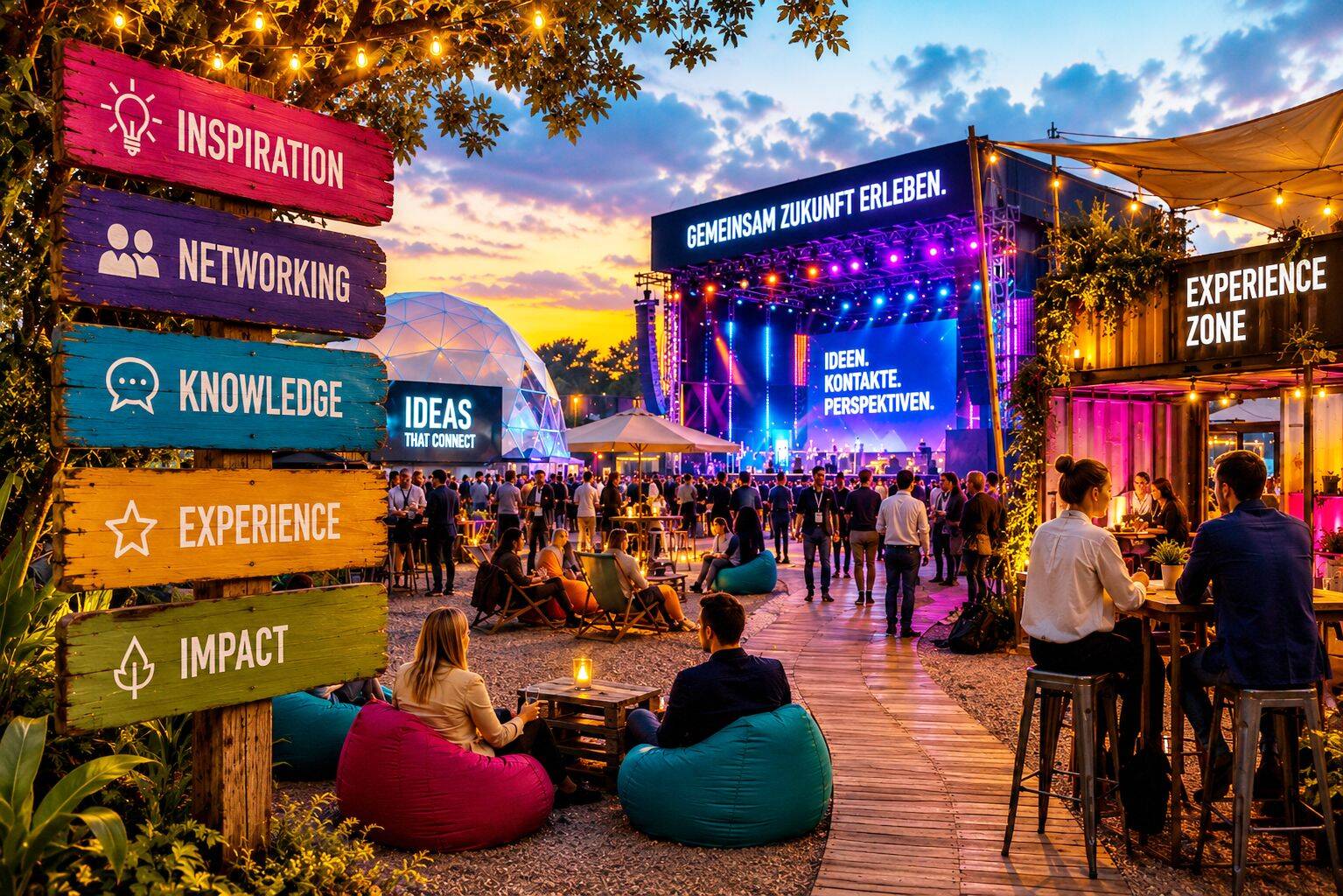
Festivalization can make events more emotional, interactive, and experience-driven, while also increasing the demands placed on concept development, organization, and delivery. Prof. Dr. Matthias Johannes Bauer of the IST University of Applied Sciences explains what lies behind the approach, the opportunities and limits it presents, and the skills the event industry will need in the future.
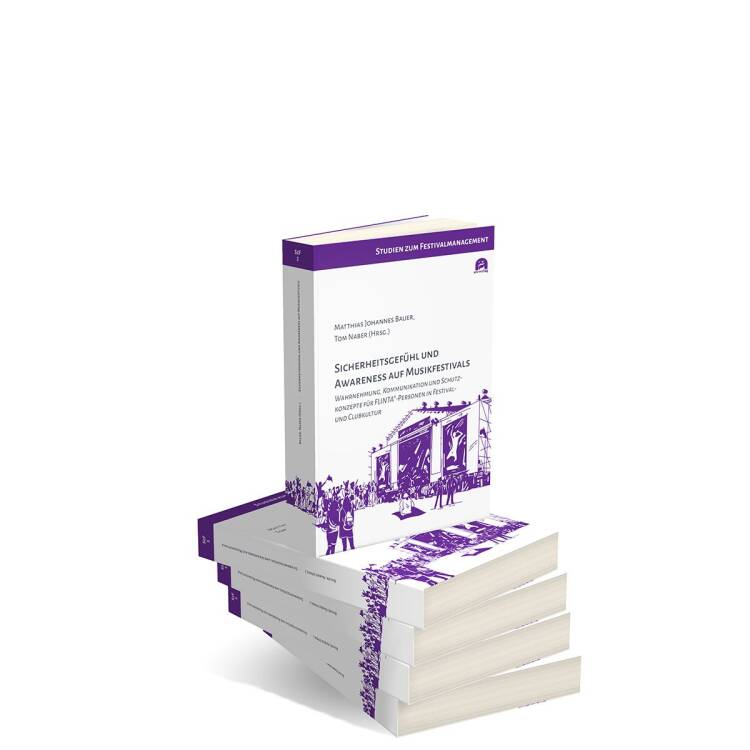
Image created with AI
Festivalization is far more than a design trend. It requires clear concepts, sound expertise, and professionals who can bring experience, safety, communications, and commercial viability together.
The discount code boe 2027 provides a 10% discount on all degree programs and continuing education courses in Communication & Business at the IST University of Applied Sciences and the IST Study Institute.