AI-generated illustration (2026)
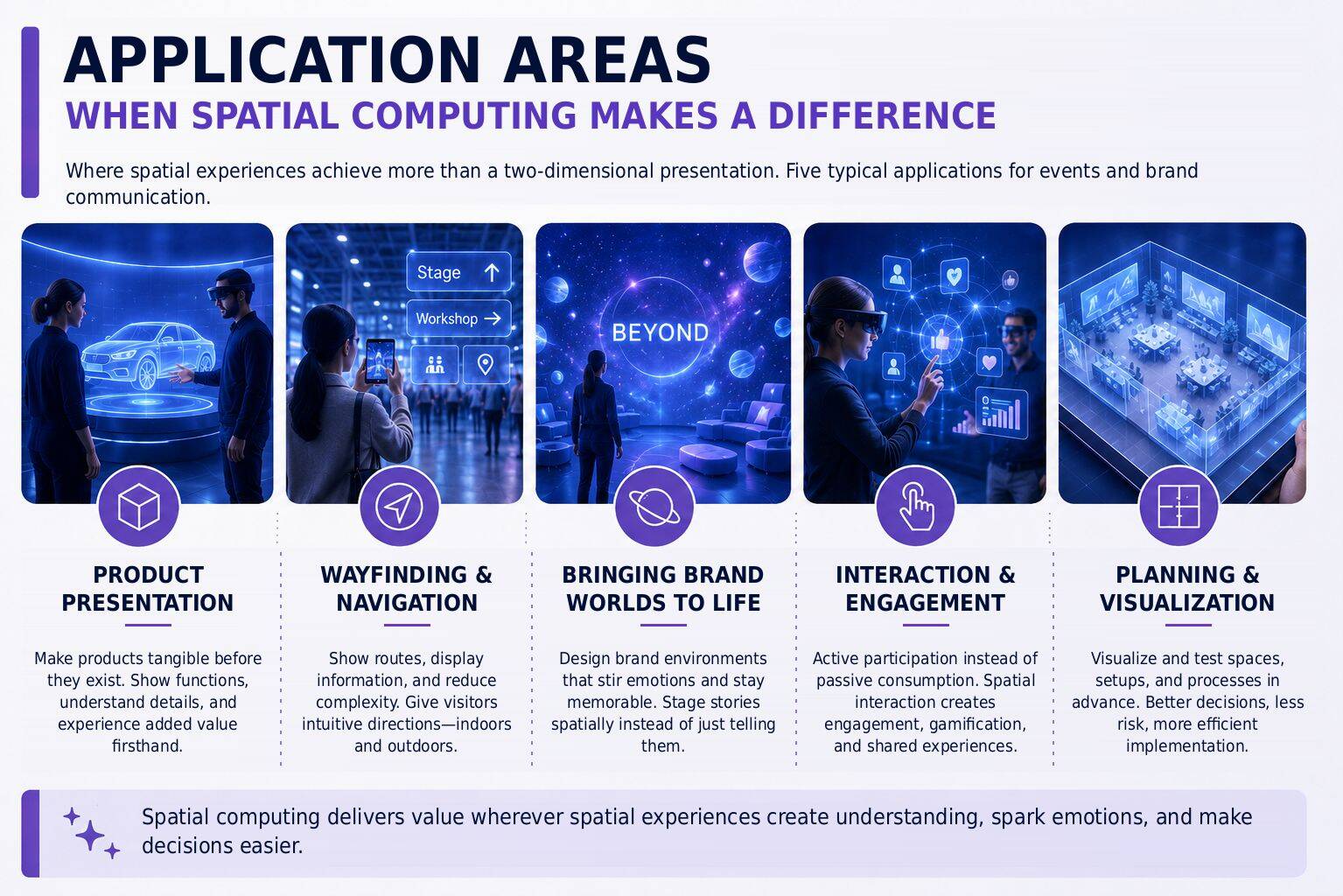
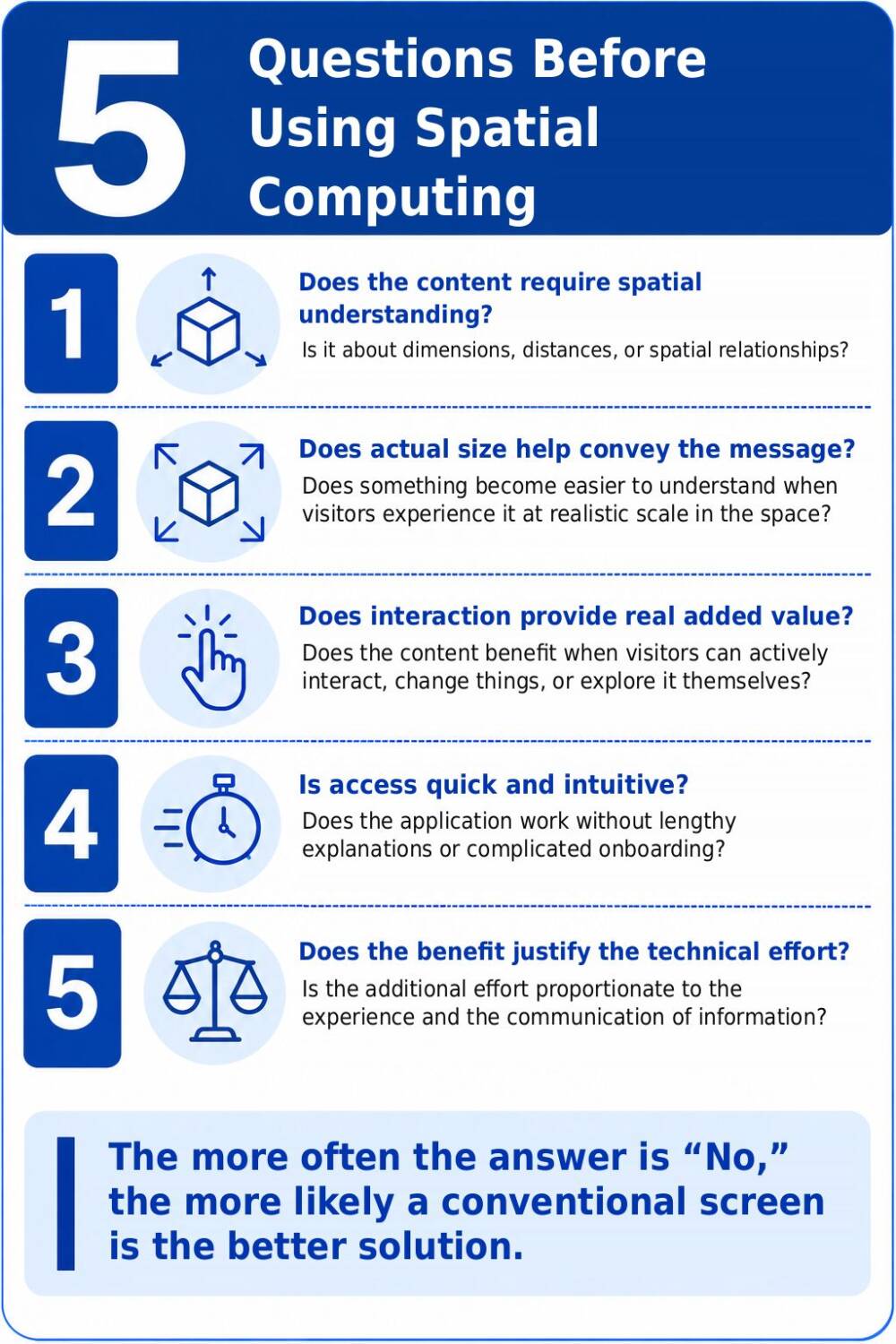
Image credit: AI-generated illustration (2026)
Conclusion: When Content Needs Space
Screens will not disappear from the event industry. They are too versatile, straightforward, and familiar. Spatial computing does not need to displace them. Its advantages become apparent where space itself is part of how information is conveyed: when dimensions matter, context is important, or digital content needs to be directly connected to the real-world environment.
The more interesting question, therefore, is how naturally digital information will become part of physical space in the future. This is what makes spatial computing more than just another technology on the event stage.
From add-on to tool: Whether spatial computing can make a meaningful contribution to an event becomes clear as early as the concept development stage. What information do visitors need, and where? Which products are difficult to present physically? Where does spatial visualization help people understand relationships more quickly or try things out for themselves? These questions make it possible to assess whether spatial computing really offers greater added value in a given situation
Screen or Space?
The issue, then, is less whether spatial computing can replace a screen. The key question is which medium best meets the specific requirements. Screens remain suitable for clearly structured content that needs to be grasped immediately. Spatial computing comes into its own when the spatial relationship is itself part of the information.
Easy access matters: Which technology is most appropriate depends not only on the content but also on the situation in which it is used. At trade shows and open events in particular, information needs to be accessible without unnecessary steps. If visitors first have to install an application, operate an additional device, or go through a lengthy introduction, a screen may be the better choice. What matters is which medium makes the content most directly accessible to the intended audience.
In everyday event operations, spatial computing must work quickly, reliably, and intuitively.
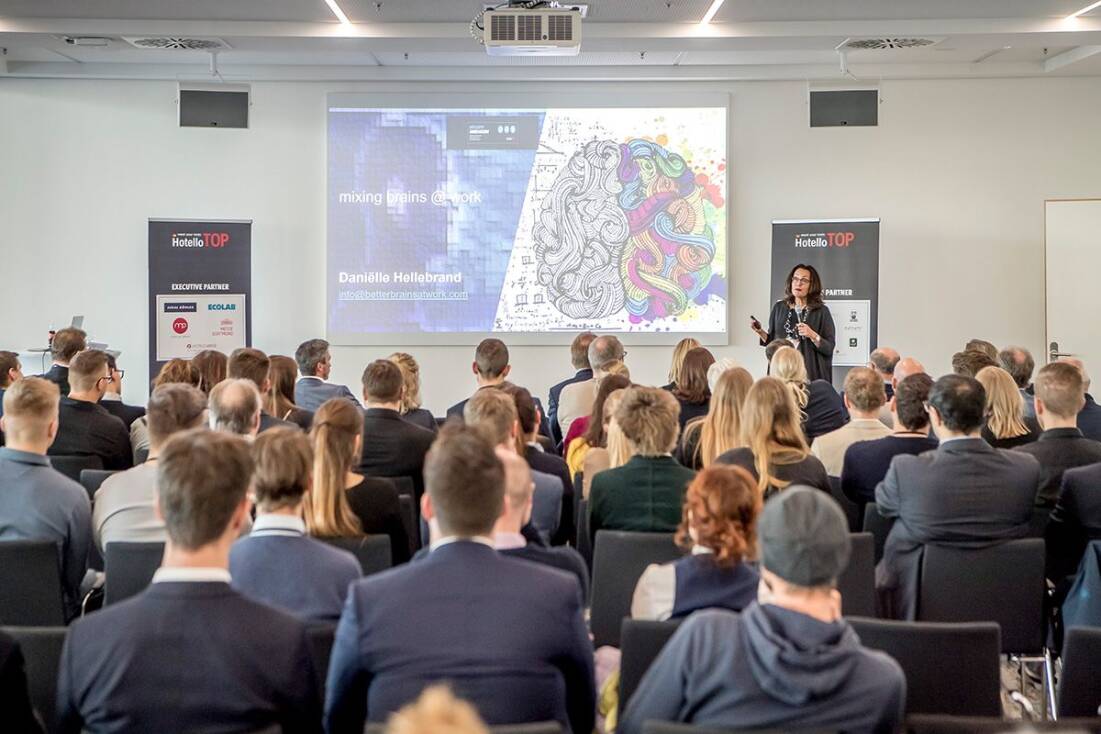
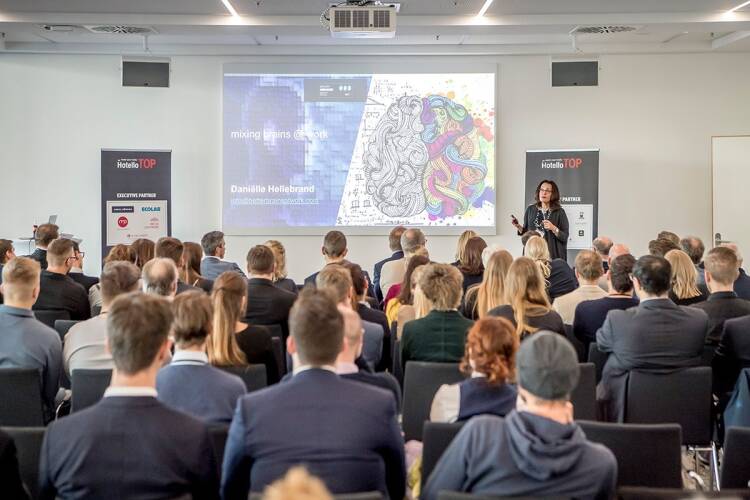
For presentations, schedules, or concise content, a conventional screen often remains the faster, clearer, and more efficient solution—as in this presentation during the supporting program at boe international.
Image credit: Messe Dortmund / Wolfgang Hel
How Spatial Computing Is Changing Events
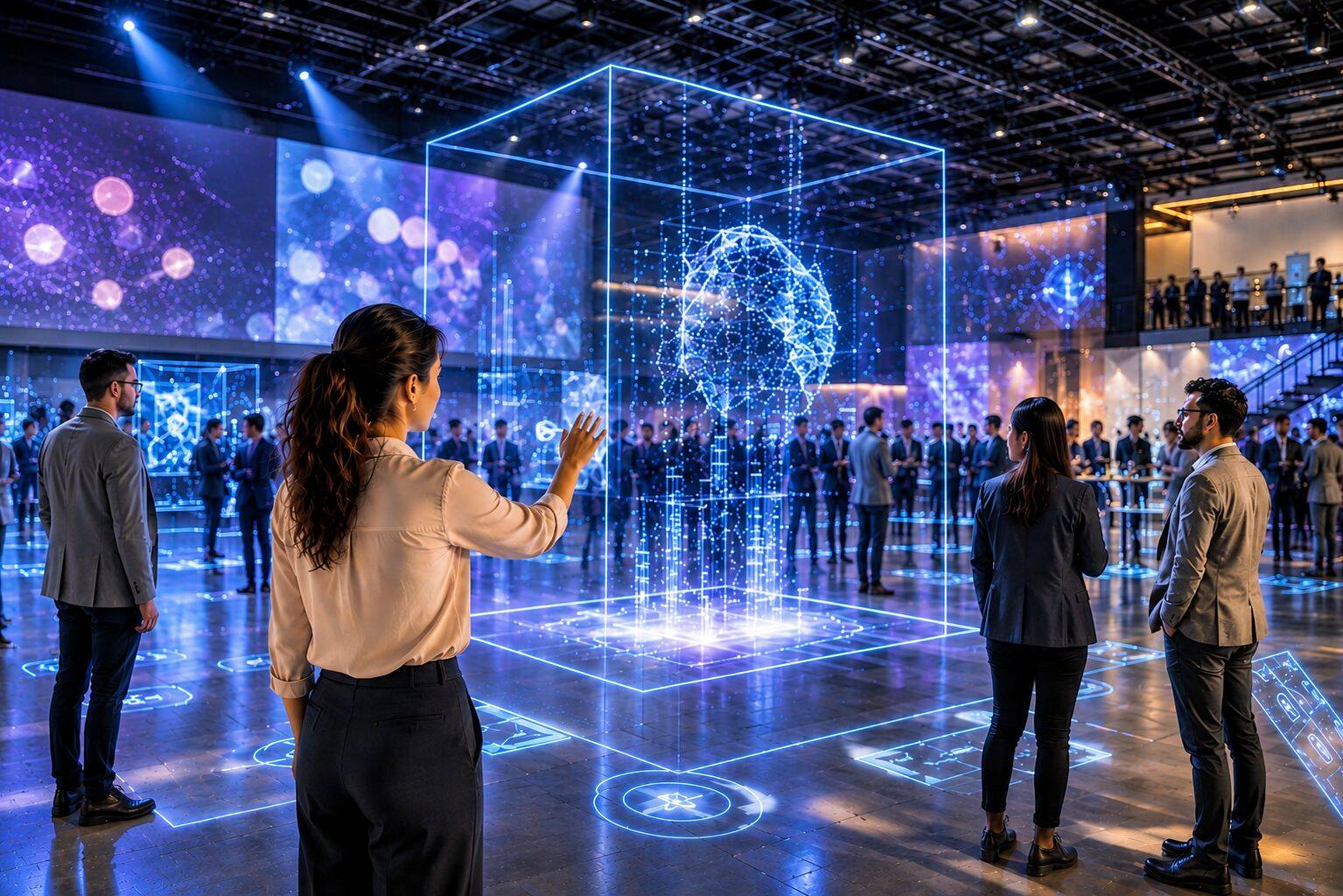
Spatial computing combines real-world surroundings with digital information and interactive elements to create a new event experience. | Image credit: AI-generated illustration (2026)
The Wow Factor Is Not Enough
An application may be technically impressive yet contribute little to an event. The technical and organizational effort should not be underestimated. Headsets have to be distributed, configured, and kept ready for use. Wearing comfort, hygiene, and accessibility must be considered, as must the production of custom 3D content and on-site technical support.
The benefits of spatial computing must justify the effort involved.
More room for digital content? Spatial computing makes information visible where it is needed—directly on objects, in real-world environments, or right in the middle of an event. The technology becomes particularly interesting when it makes content easier to understand, experience, or interact with, going beyond what a screen can offer.
When Space Becomes the Interface
The key difference from a conventional screen is not that spatial computing is simply more digital. Rather, it changes where digital information appears. Content is no longer tied to a fixed surface but can relate to physical spaces, objects, and situations. For events, this is particularly relevant because space and staging are already essential parts of the experience. Visitors move through exhibition halls, brand environments, exhibitions, and stage settings. Spatial computing adds digital layers to these physical surroundings that respond to the location, real-world objects, or users’ movements. This changes not only how content is presented but also how visitors perceive and use information.
Digital content is not merely displayed; it is positioned within physical space.
More than a technology: Spatial computing is neither a single tool nor a synonym for virtual reality (VR). The term describes systems that can capture physical space, precisely place digital content within it, and make that content accessible as an experience. Cameras and sensors capture the surroundings, spatial tracking determines position and movement, 3D software calculates digital objects, and different devices make them visible. These may be mixed reality headsets, but also smartphones, tablets, or other systems. The underlying principle: The technology recognizes where something is located and how a user interacts with it.
When space itself becomes information: A screen shows content from a fixed perspective. Spatial computing, by contrast, can connect digital objects to physical space. Visitors can walk around them, experience them at actual size, or view them from different angles. This is particularly relevant when scale and spatial impact are essential to understanding. For example, an exhibition booth that has not yet been built can be explored virtually. Sightlines, distances, and dimensions become immediately understandable. The spatial structure of a complex machine can likewise be visualized, even if the physical product is not on site.
Added value arises when spatial visualization reveals relationships
that remain abstract on a screen.
Information in the right place: Rather than providing all product information on a display or in an app, spatial computing can connect content directly to an exhibit, a component, or a specific action. Virtual labels can explain functions, highlight components, or display additional layers of information. Users no longer have to establish the connection between the content and the object themselves; it becomes immediately apparent.
Interaction instead of presentation: Spatial computing can turn viewers into active users. They can select variants, change states, trigger processes, or try out how a system responds to specific inputs. With complex products and processes in particular, this creates a different way to engage with them: Relationships are not just explained but can be understood through hands-on interaction. It also opens up new possibilities for brand experiences. Virtual elements can extend physical settings, products can be placed in different scenarios, and installations can be designed so that visitors actively influence what happens.
The route becomes part of the information: Another application is visitor wayfinding. At large exhibition grounds or complex event venues, digital markers can identify routes, halls, stages, or exhibitors while taking the current location into account. Instead of appearing on a separate overview map, these navigational aids appear directly along the actual route. Here, however, an important limitation also becomes clear: There is little benefit if visitors must put on a headset just to follow simple directions. Spatial computing only makes sense when it makes wayfinding easier and more intuitive.
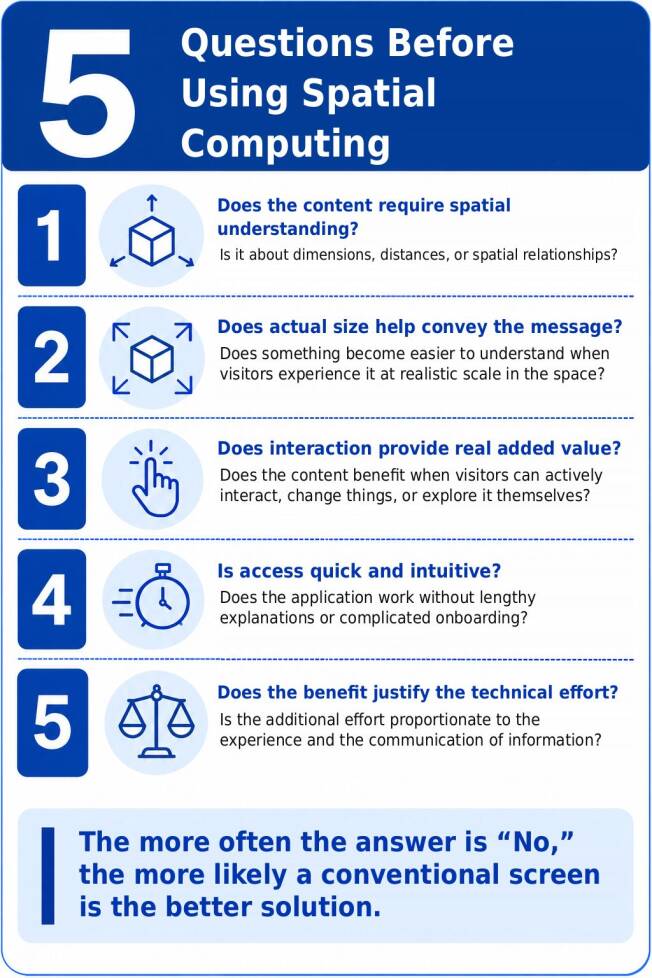
AI-generated illustration (2026)
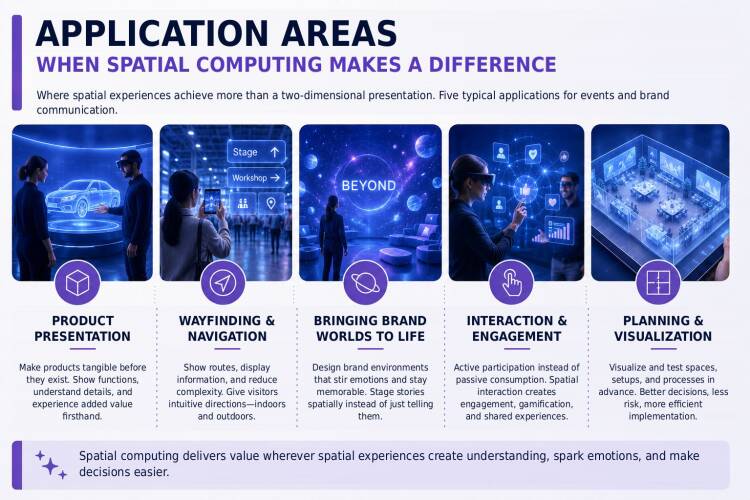
How Spatial Computing Is Changing Events
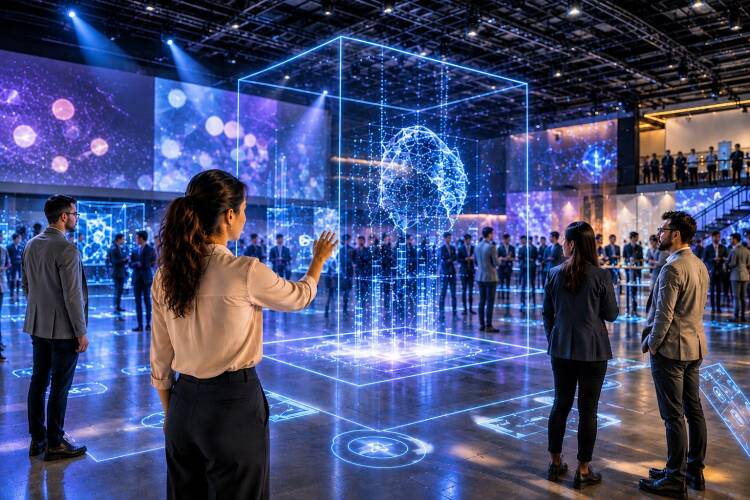
Spatial computing combines real-world surroundings with digital information and interactive elements to create a new event experience. | Image credit: AI-generated illustration (2026)
For presentations, schedules, or concise content, a conventional screen often remains the faster, clearer, and more efficient solution—as in this presentation during the supporting program at boe international.
Image credit: Messe Dortmund / Wolfgang Hel
Conclusion: When Content Needs Space
Screens will not disappear from the event industry. They are too versatile, straightforward, and familiar. Spatial computing does not need to displace them. Its advantages become apparent where space itself is part of how information is conveyed: when dimensions matter, context is important, or digital content needs to be directly connected to the real-world environment.
The more interesting question, therefore, is how naturally digital information will become part of physical space in the future. This is what makes spatial computing more than just another technology on the event stage.
From add-on to tool: Whether spatial computing can make a meaningful contribution to an event becomes clear as early as the concept development stage. What information do visitors need, and where? Which products are difficult to present physically? Where does spatial visualization help people understand relationships more quickly or try things out for themselves? These questions make it possible to assess whether spatial computing really offers greater added value in a given situation
Image credit: AI-generated illustration (2026)
Screen or Space?
The issue, then, is less whether spatial computing can replace a screen. The key question is which medium best meets the specific requirements. Screens remain suitable for clearly structured content that needs to be grasped immediately. Spatial computing comes into its own when the spatial relationship is itself part of the information.
Easy access matters: Which technology is most appropriate depends not only on the content but also on the situation in which it is used. At trade shows and open events in particular, information needs to be accessible without unnecessary steps. If visitors first have to install an application, operate an additional device, or go through a lengthy introduction, a screen may be the better choice. What matters is which medium makes the content most directly accessible to the intended audience.
In everyday event operations, spatial computing must work quickly, reliably, and intuitively.
The Wow Factor Is Not Enough
An application may be technically impressive yet contribute little to an event. The technical and organizational effort should not be underestimated. Headsets have to be distributed, configured, and kept ready for use. Wearing comfort, hygiene, and accessibility must be considered, as must the production of custom 3D content and on-site technical support.
The benefits of spatial computing must justify the effort involved.
More room for digital content? Spatial computing makes information visible where it is needed—directly on objects, in real-world environments, or right in the middle of an event. The technology becomes particularly interesting when it makes content easier to understand, experience, or interact with, going beyond what a screen can offer.
When Space Becomes the Interface
The key difference from a conventional screen is not that spatial computing is simply more digital. Rather, it changes where digital information appears. Content is no longer tied to a fixed surface but can relate to physical spaces, objects, and situations. For events, this is particularly relevant because space and staging are already essential parts of the experience. Visitors move through exhibition halls, brand environments, exhibitions, and stage settings. Spatial computing adds digital layers to these physical surroundings that respond to the location, real-world objects, or users’ movements. This changes not only how content is presented but also how visitors perceive and use information.
Digital content is not merely displayed; it is positioned within physical space.
More than a technology: Spatial computing is neither a single tool nor a synonym for virtual reality (VR). The term describes systems that can capture physical space, precisely place digital content within it, and make that content accessible as an experience. Cameras and sensors capture the surroundings, spatial tracking determines position and movement, 3D software calculates digital objects, and different devices make them visible. These may be mixed reality headsets, but also smartphones, tablets, or other systems. The underlying principle: The technology recognizes where something is located and how a user interacts with it.
When space itself becomes information: A screen shows content from a fixed perspective. Spatial computing, by contrast, can connect digital objects to physical space. Visitors can walk around them, experience them at actual size, or view them from different angles. This is particularly relevant when scale and spatial impact are essential to understanding. For example, an exhibition booth that has not yet been built can be explored virtually. Sightlines, distances, and dimensions become immediately understandable. The spatial structure of a complex machine can likewise be visualized, even if the physical product is not on site.
Added value arises when spatial visualization reveals relationships
that remain abstract on a screen.
Information in the right place: Rather than providing all product information on a display or in an app, spatial computing can connect content directly to an exhibit, a component, or a specific action. Virtual labels can explain functions, highlight components, or display additional layers of information. Users no longer have to establish the connection between the content and the object themselves; it becomes immediately apparent.
Interaction instead of presentation: Spatial computing can turn viewers into active users. They can select variants, change states, trigger processes, or try out how a system responds to specific inputs. With complex products and processes in particular, this creates a different way to engage with them: Relationships are not just explained but can be understood through hands-on interaction. It also opens up new possibilities for brand experiences. Virtual elements can extend physical settings, products can be placed in different scenarios, and installations can be designed so that visitors actively influence what happens.
The route becomes part of the information: Another application is visitor wayfinding. At large exhibition grounds or complex event venues, digital markers can identify routes, halls, stages, or exhibitors while taking the current location into account. Instead of appearing on a separate overview map, these navigational aids appear directly along the actual route. Here, however, an important limitation also becomes clear: There is little benefit if visitors must put on a headset just to follow simple directions. Spatial computing only makes sense when it makes wayfinding easier and more intuitive.