Advert
What This Means
The past few weeks do not point to opposing trends, but to a common logic: Automation is consistently moving behind the scenes, while what remains tangible on site is staged more deliberately and evaluated more rigorously for its impact. For marketing leaders, this means justifying event budgets by their demonstrable contribution to the pipeline rather than by reach, deploying AI first where it streamlines processes, and investing the time it frees up in curated encounters that simply cannot be generated by a prompt.
How AI Is Reshaping Event Marketing
Sources:
https://www.marketing-boerse.de/fachartikel/details/2616-5-marketing-learnings-aus-live-entertainment/204617
https://www.marketing-boerse.de/podcast/details/2603-so-funktioniert-event-marketing-heute--mit-und-ohne-ki/203588
https://www.marketing-boerse.de/podcast/details/2607-wie-ki-agenten-das-marketing-fundamental-veraendern/203939
https://www.marketing-boerse.de/podcast/details/2606-wie-digitale-doppelgaenger-event-konzepte-vorab-testen/203859
https://www.marketing-boerse.de/podcast/details/2607-was-es-bei-der-internationalen-eventplanung-zu-beachten-gilt/203938
https://www.marketing-boerse.de/podcast/details/2605-wie-unternehmen-kundenbeziehungen-neu-denken/203771
https://www.marketing-boerse.de/podcast/details/2636-was-macht-ein-fachevent-wirklich-erfolgreich/206176
https://www.marketing-boerse.de/podcast/details/2606-wie-eventmarketer-mit-ki-bis-zu-80-ihrer-planungszeit-einsparen/203800
https://www.marketing-boerse.de/podcast/details/2606-warum-live-events-trotz-digitalisierung-an-bedeutung-gewinnen/20386
Torsten Schwarz has written more than 20 books, has held several university teaching appointments, and holds the German academic title Privatdozent. Horizont described him as one of Germany’s leading experts in online marketing. The publication e-commerce magazin calls him the “email marketing guru.” He previously served as marketing director at a software company and now advises international companies.
He has given lectures and seminars on digital topics since 1987. In 1994, he set up one of the world’s first web servers. He was named “Lecturer of the Year” by Dialog Akademie DDA. Schwarz launched the marketing-BÖRSE and Email-Marketing-Forum portals. For the past 15 years, he has led the Online Marketing Expert Group within the Association of the German Internet Industry. He is active in the German Digital Economy Association (BVDW) and the German Dialogue Marketing Association (DDV), and is a co-founder of the German Speakers Association (GSA). Together with these associations, he analyzes the digital marketing of the 5,000 most important companies each year.
Guast Article
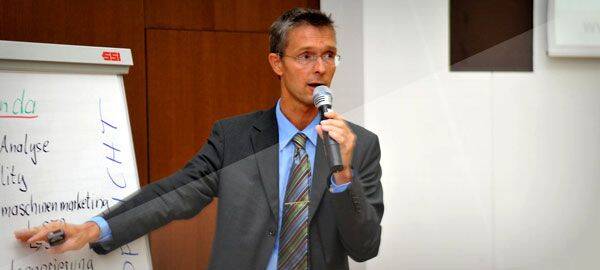
© Dr. Torsten Schwarz, founder and publisher of marketing BÖRSE. (Image: marketing-Börse GmbH)
AI Moves into the Engine Room, Not onto the Stage
What stands out is how matter-of-factly the industry now talks about artificial intelligence. Thomas Kenyeri of the KESCH Group states plainly that the days of AI bashing are over; the real question is no longer whether to use AI, but how to integrate it meaningfully into day-to-day work. Hannes Schwarm of VOK DAMS offers a concrete example: A client originally wanted to invest 50,000 euros in a keynote speaker, until a digital twin of the target audience showed that internal exchange formats would have a greater impact—the budget went to workshop facilitators instead. Patric Weiler adds the strategic perspective: A kitchen manufacturer he is currently working with has identified 187 AI use cases, ranging from the corporate level down to individual processes. Kai Halter of ebm-papst, in turn, warns against a broad rollout and recommends starting with tightly defined pilot projects, such as an agent for product names that includes legal review. Sina Bünte and Benjamin Desche add the practical perspective: Bünte sees AI as a tool for translation and summarization that requires human validation, while Desche calculates that AI can speed up the evaluation of venue proposals by up to 80 percent, provided the prompts are precise. U.S. market observations confirm this shift: At Cvent CONNECT 2026, the focus was no longer on visions, but on workflows, data quality, and the question of which AI functions can actually be used productively.
The Scarce Resource Now Is Genuine Attention
As more communication is automated, what cannot be automated becomes more costly. Jörg Zeissig of HOLTMANN+ makes the point unequivocally in the context of exhibition stand design: Even the best design cannot rescue a weak proposition. Anyone who invests in decoration without first examining the message is wasting money. In the U.S., this principle has acquired a name: analog escapism. The term was prompted by a Hasbro study showing that 80 percent of Gen Z and millennial respondents feel exhausted by digital overstimulation. Crayola responded with “Camp Crayola” for adults in Brooklyn, Play-Doh partnered with the Whitney Museum, and HubSpot incorporated a deliberately device-free “Unplugged Studio” into its new large-scale event, Unbound. Kai Halter highlights the business dimension of this trend: Curated talks selected by an expert advisory board rather than sponsorship budgets inspire noticeably more trust among professional audiences than paid speaking slots. Both observations point to a conclusion that matters to leaders at mid-sized companies and large corporations alike: Scarcity is shifting from content production to genuine human connection, and anyone who ignores this shift is investing in the wrong place as this need continues to grow.
Curated Connections Instead of Chance Encounters
Networking was long considered a by-product of an event; today, it is becoming a product in its own right. Thomas Kenyeri explains that people are used to being online and no longer naturally strike up conversations on site. Networking therefore needs to be actively facilitated through pre-event questions, AI tools, or clear guidance throughout the event. Kai Halter makes a similar point from a corporate perspective: An active industry network provides early signals of emerging trends before they become mainstream. Anyone who spends an entire career at a single company loses this basis for comparison. Tanja Schramm adds the regional data: At the formats she oversees, 70 to 80 percent of trade visitors come from the region, while the rest travel specifically to make many connections in a short period. The U.S. examples point in the same direction: At Unbound, HubSpot set up permanent “Exchanges” organized by industry and role, while Cvent uses AI to suggest suitable conversation partners based on interests and actual behavior. The social value of an event is therefore shifting from sheer attendance to how well people are matched.
The Event as a Content Factory
The final trend concerns reach beyond the event venue. Hetzenegger shows that, in live entertainment, social media is no longer merely a stage but an active driver of demand. For TikTok videos, the hook and story drive results, not targeting. U.S. research provides a corresponding example: At the Outdoor Retailer relaunch in Minneapolis, around 150 invited creators and media representatives generated more than 850 contacts and reached an audience of 21.2 million people. Concert partnerships, from Taco Bell with Olivia Rodrigo to Spotify with Phoebe Bridgers, also show how brands tap into existing fan cultures instead of trying to become the stage themselves. Benjamin Desche adds the technical perspective: Websites and event content now also need to be optimized for generative search systems. Generative Engine Optimization is the logical extension of traditional SEO.
Automation is consistently moving behind the scenes, while what remains tangible on site is staged more deliberately and evaluated more rigorously for its impact.
“What did each dinner or meeting contribute to the pipeline? Marketing leaders who still make their case using attendance figures are out of step with today’s budget logic.”
Markus Hetzenegger sums it up in his article on live entertainment marketing: In his industry, what matters is not how much attention a campaign generates, but how many tickets it sells. ROAS, CPA, and actual revenue are not just metrics among many; they are the only ones that count. This uncompromising approach increasingly looks like a sign of where event marketing as a whole is heading. Tanja Schramm at MEET GERMANY also observes that responsibilities for corporate events are shifting and that investment decisions increasingly need to be justified. In the U.S., meanwhile, data provider Vendelux, fresh from a $50 million funding round, demonstrates that CRM integration and event ROI have long since become a software category of their own. The question has changed: no longer “How many leads did our booth generate?” but “What did each dinner or meeting contribute to the pipeline? Marketing leaders who still make their case using attendance figures are out of step with today’s budget logic.”
When the dating app Grindr announced a Madonna performance in Times Square in June, there were just thirty minutes between the push notification and the start of the show. Around 50,000 people showed up anyway, while livestreams and social media clips simultaneously brought the event to the timelines of those who were not there. This figure is more than just a marketing anecdote from New York. It shows how the benchmark for event success is shifting: from the number of attendees to the question of how much digital buzz a physical moment generates. For CMOs at mid-sized and large companies, it is worth looking back at the past few weeks, because industry articles, expert interviews, and current U.S. market observations reveal a pattern that extends beyond individual campaigns.

Guast Article
Automation is consistently moving behind the scenes, while what remains tangible on site is staged more deliberately and evaluated more rigorously for its impact.
AI Moves into the Engine Room, Not onto the Stage
What stands out is how matter-of-factly the industry now talks about artificial intelligence. Thomas Kenyeri of the KESCH Group states plainly that the days of AI bashing are over; the real question is no longer whether to use AI, but how to integrate it meaningfully into day-to-day work. Hannes Schwarm of VOK DAMS offers a concrete example: A client originally wanted to invest 50,000 euros in a keynote speaker, until a digital twin of the target audience showed that internal exchange formats would have a greater impact—the budget went to workshop facilitators instead. Patric Weiler adds the strategic perspective: A kitchen manufacturer he is currently working with has identified 187 AI use cases, ranging from the corporate level down to individual processes. Kai Halter of ebm-papst, in turn, warns against a broad rollout and recommends starting with tightly defined pilot projects, such as an agent for product names that includes legal review. Sina Bünte and Benjamin Desche add the practical perspective: Bünte sees AI as a tool for translation and summarization that requires human validation, while Desche calculates that AI can speed up the evaluation of venue proposals by up to 80 percent, provided the prompts are precise. U.S. market observations confirm this shift: At Cvent CONNECT 2026, the focus was no longer on visions, but on workflows, data quality, and the question of which AI functions can actually be used productively.
The Scarce Resource Now Is Genuine Attention
As more communication is automated, what cannot be automated becomes more costly. Jörg Zeissig of HOLTMANN+ makes the point unequivocally in the context of exhibition stand design: Even the best design cannot rescue a weak proposition. Anyone who invests in decoration without first examining the message is wasting money. In the U.S., this principle has acquired a name: analog escapism. The term was prompted by a Hasbro study showing that 80 percent of Gen Z and millennial respondents feel exhausted by digital overstimulation. Crayola responded with “Camp Crayola” for adults in Brooklyn, Play-Doh partnered with the Whitney Museum, and HubSpot incorporated a deliberately device-free “Unplugged Studio” into its new large-scale event, Unbound. Kai Halter highlights the business dimension of this trend: Curated talks selected by an expert advisory board rather than sponsorship budgets inspire noticeably more trust among professional audiences than paid speaking slots. Both observations point to a conclusion that matters to leaders at mid-sized companies and large corporations alike: Scarcity is shifting from content production to genuine human connection, and anyone who ignores this shift is investing in the wrong place as this need continues to grow.
Curated Connections Instead of Chance Encounters
Networking was long considered a by-product of an event; today, it is becoming a product in its own right. Thomas Kenyeri explains that people are used to being online and no longer naturally strike up conversations on site. Networking therefore needs to be actively facilitated through pre-event questions, AI tools, or clear guidance throughout the event. Kai Halter makes a similar point from a corporate perspective: An active industry network provides early signals of emerging trends before they become mainstream. Anyone who spends an entire career at a single company loses this basis for comparison. Tanja Schramm adds the regional data: At the formats she oversees, 70 to 80 percent of trade visitors come from the region, while the rest travel specifically to make many connections in a short period. The U.S. examples point in the same direction: At Unbound, HubSpot set up permanent “Exchanges” organized by industry and role, while Cvent uses AI to suggest suitable conversation partners based on interests and actual behavior. The social value of an event is therefore shifting from sheer attendance to how well people are matched.
The Event as a Content Factory
The final trend concerns reach beyond the event venue. Hetzenegger shows that, in live entertainment, social media is no longer merely a stage but an active driver of demand. For TikTok videos, the hook and story drive results, not targeting. U.S. research provides a corresponding example: At the Outdoor Retailer relaunch in Minneapolis, around 150 invited creators and media representatives generated more than 850 contacts and reached an audience of 21.2 million people. Concert partnerships, from Taco Bell with Olivia Rodrigo to Spotify with Phoebe Bridgers, also show how brands tap into existing fan cultures instead of trying to become the stage themselves. Benjamin Desche adds the technical perspective: Websites and event content now also need to be optimized for generative search systems. Generative Engine Optimization is the logical extension of traditional SEO.
Advert
Markus Hetzenegger sums it up in his article on live entertainment marketing: In his industry, what matters is not how much attention a campaign generates, but how many tickets it sells. ROAS, CPA, and actual revenue are not just metrics among many; they are the only ones that count. This uncompromising approach increasingly looks like a sign of where event marketing as a whole is heading. Tanja Schramm at MEET GERMANY also observes that responsibilities for corporate events are shifting and that investment decisions increasingly need to be justified. In the U.S., meanwhile, data provider Vendelux, fresh from a $50 million funding round, demonstrates that CRM integration and event ROI have long since become a software category of their own. The question has changed: no longer “How many leads did our booth generate?” but “What did each dinner or meeting contribute to the pipeline? Marketing leaders who still make their case using attendance figures are out of step with today’s budget logic.”
“What did each dinner or meeting contribute to the pipeline? Marketing leaders who still make their case using attendance figures are out of step with today’s budget logic.”
How AI Is Reshaping Event Marketing
Torsten Schwarz has written more than 20 books, has held several university teaching appointments, and holds the German academic title Privatdozent. Horizont described him as one of Germany’s leading experts in online marketing. The publication e-commerce magazin calls him the “email marketing guru.” He previously served as marketing director at a software company and now advises international companies.
He has given lectures and seminars on digital topics since 1987. In 1994, he set up one of the world’s first web servers. He was named “Lecturer of the Year” by Dialog Akademie DDA. Schwarz launched the marketing-BÖRSE and Email-Marketing-Forum portals. For the past 15 years, he has led the Online Marketing Expert Group within the Association of the German Internet Industry. He is active in the German Digital Economy Association (BVDW) and the German Dialogue Marketing Association (DDV), and is a co-founder of the German Speakers Association (GSA). Together with these associations, he analyzes the digital marketing of the 5,000 most important companies each year.
When the dating app Grindr announced a Madonna performance in Times Square in June, there were just thirty minutes between the push notification and the start of the show. Around 50,000 people showed up anyway, while livestreams and social media clips simultaneously brought the event to the timelines of those who were not there. This figure is more than just a marketing anecdote from New York. It shows how the benchmark for event success is shifting: from the number of attendees to the question of how much digital buzz a physical moment generates. For CMOs at mid-sized and large companies, it is worth looking back at the past few weeks, because industry articles, expert interviews, and current U.S. market observations reveal a pattern that extends beyond individual campaigns.
KI, Events und Budgets im Fokus. Auf der Messe diskutiert die Eventbranche, wie sich in Zeiten von Multikrisen intelligente Technologien und gezielte Investitionen auszahlen. ©Freepik
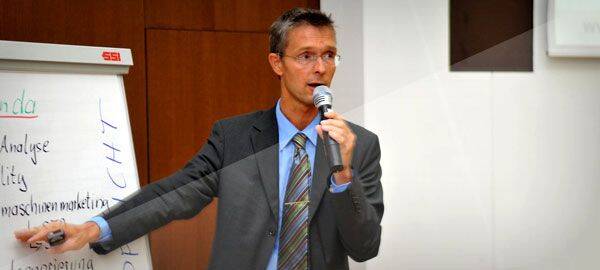
© Dr. Torsten Schwarz, founder and publisher of marketing BÖRSE. (Image: marketing-Börse GmbH)

What This Means
The past few weeks do not point to opposing trends, but to a common logic: Automation is consistently moving behind the scenes, while what remains tangible on site is staged more deliberately and evaluated more rigorously for its impact. For marketing leaders, this means justifying event budgets by their demonstrable contribution to the pipeline rather than by reach, deploying AI first where it streamlines processes, and investing the time it frees up in curated encounters that simply cannot be generated by a prompt.
Sources:
https://www.marketing-boerse.de/fachartikel/details/2616-5-marketing-learnings-aus-live-entertainment/204617
https://www.marketing-boerse.de/podcast/details/2603-so-funktioniert-event-marketing-heute--mit-und-ohne-ki/203588
https://www.marketing-boerse.de/podcast/details/2607-wie-ki-agenten-das-marketing-fundamental-veraendern/203939
https://www.marketing-boerse.de/podcast/details/2606-wie-digitale-doppelgaenger-event-konzepte-vorab-testen/203859
https://www.marketing-boerse.de/podcast/details/2607-was-es-bei-der-internationalen-eventplanung-zu-beachten-gilt/203938
https://www.marketing-boerse.de/podcast/details/2605-wie-unternehmen-kundenbeziehungen-neu-denken/203771
https://www.marketing-boerse.de/podcast/details/2636-was-macht-ein-fachevent-wirklich-erfolgreich/206176
https://www.marketing-boerse.de/podcast/details/2606-wie-eventmarketer-mit-ki-bis-zu-80-ihrer-planungszeit-einsparen/203800
https://www.marketing-boerse.de/podcast/details/2606-warum-live-events-trotz-digitalisierung-an-bedeutung-gewinnen/20386