Advert
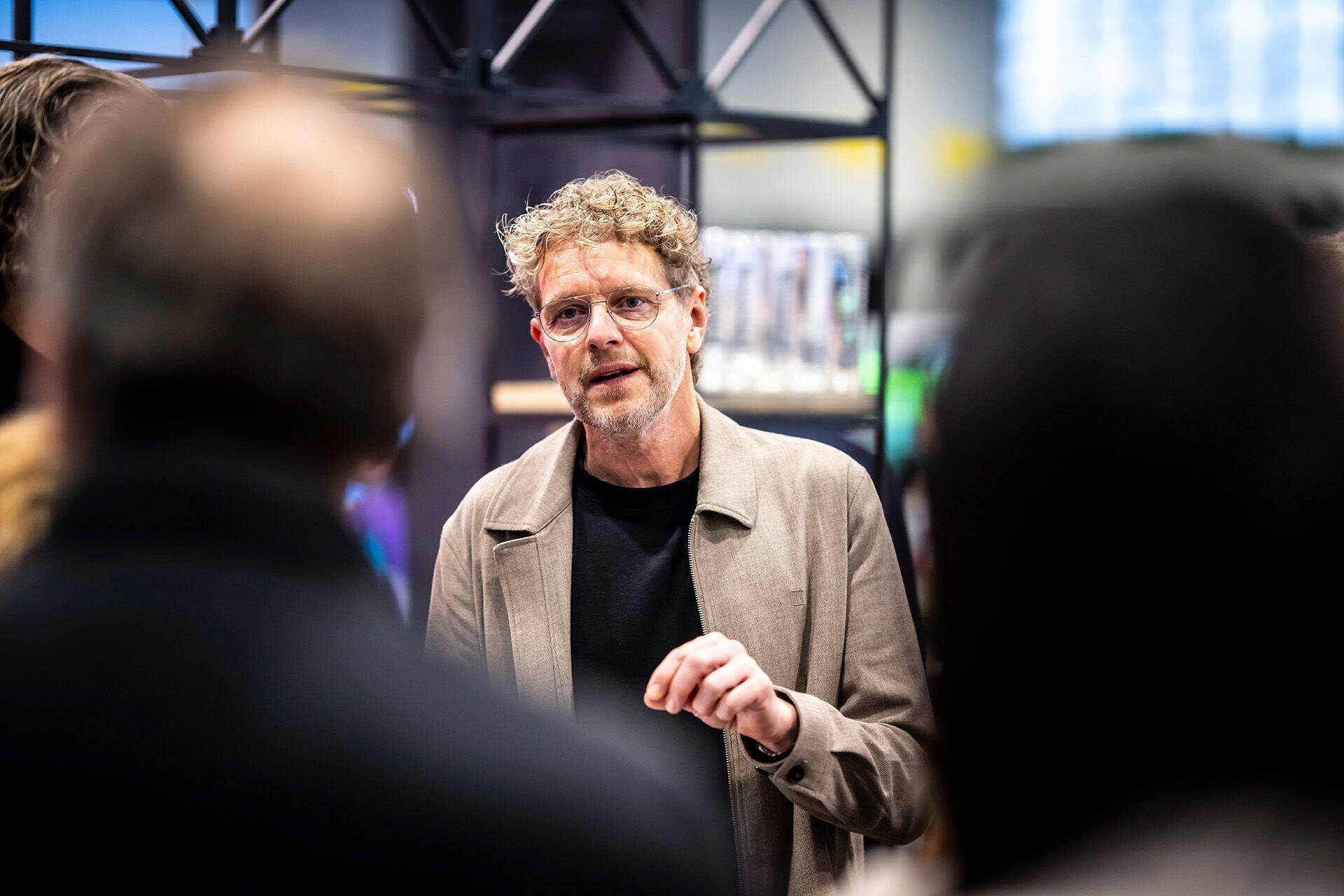
Europe’s strength lies in connection: Maarten Schram in conversation with boe international. © Messe Dortmund / Wolfgang Helm
If you could make one wish for the European event industry to mark the LCA’s tenth anniversary, what would it be?
Maarten Schram: That we keep believing in the power of connection — both within our industry and in the work we create. We live in a time when societies are becoming more polarised and communication increasingly takes place through screens and algorithms. Our industry creates something increasingly scarce: real encounters between people.
My wish would be that Europe recognises live communication not only as an economic and creative industry, but also as a powerful instrument for creating understanding, trust and belonging. And for our own industry: stay curious, share more and keep crossing borders. Because after ten years of LiveCom Alliance, I am perhaps more convinced of the original idea than ever: we are stronger when we connect.
Which topics will shape the European event industry most in the coming years: internationalisation, sustainability, AI, talent, economic pressure – or entirely different developments?
Maarten Schram: All of those topics matter, but I think there is a larger question underneath them: how do we continue creating meaningful human connection in a world that is becoming more digital, more fragmented and more complex?
AI will fundamentally influence how agencies work. Sustainability will increasingly become a prerequisite rather than a choice. Talent and economic pressure will force companies to rethink how they organise themselves. And internationalisation will create both opportunities and complexity. But technology should ultimately strengthen human connection rather than replace it. I still like the formulation we used recently: sustainability is the compass and technology the accelerator — but the human factor must remain central. That, to me, is the bigger direction of travel.
What priorities should the LCA set in the coming years to connect the industry more closely and help it move forward together?
Maarten Schram: After ten years, I think it is healthy to ask that question again from scratch. Organisations should not continue doing things simply because they have always done them. The first decade of LiveCom Alliance was about building connections, creating a European network and establishing a shared knowledge base.
The question for the next phase is: what does our industry need now? I see a strong need for timely, comparable European market intelligence, particularly in a period of economic uncertainty and rapid change. And I see a need for focused European encounters where people can exchange knowledge and build trusted relationships.
So our next chapter may not necessarily be about doing more. It may be about becoming even more focused, agile and relevant. The principle behind it, however, remains unchanged: bringing Europe’s live communication community together where doing so creates genuine added value.
Today, the LCA sees itself as a European platform for live communication. What does that mean in concrete terms? What role does the Alliance play for national associations, agencies and companies across Europe?
Maarten Schram: LiveCom Alliance is deliberately not another national association at European level. Our members are the national associations themselves. Our role is to connect them and create a layer above the national markets where knowledge, experiences and perspectives can be shared.
Sometimes that results in research. Sometimes in guidelines, shared practices or international connections. And sometimes the greatest value is simply knowing that you can pick up the phone and speak to a trusted colleague in another European market. That network may sound intangible, but in an increasingly international industry it is extremely valuable.
The LCA currently brings together eight national organisations and reaches more than 1,000 agencies and companies across Europe. What does this reach say about the relevance of live communication as a European industry?
Maarten Schram: It demonstrates that we are not talking about a niche discipline. Live communication represents a substantial creative and economic ecosystem across Europe, employing thousands of people and connecting strategy, creativity, production, technology, hospitality and many other disciplines.
At the same time, I think we should remain modest about those numbers. Eight countries are meaningful, but Europe is obviously much larger. One of the lessons from the past ten years is that building and maintaining a truly European network requires continuous energy and commitment. So I see those 1,000+ companies both as an achievement and as a reminder that European collaboration is never finished.
The guiding principle of the LCA is ‘Unite. Learn. Inspire.’ How important is this combination at a time when the industry is becoming more international, more complex and more connected?
Maarten Schram: It demonstrates that we are not talking about a niche discipline. Live communication represents a substantial creative and economic ecosystem across Europe, employing thousands of people and connecting strategy, creativity, production, technology, hospitality and many other disciplines.
At the same time, I think we should remain modest about those numbers. Eight countries are meaningful, but Europe is obviously much larger. One of the lessons from the past ten years is that building and maintaining a truly European network requires continuous energy and commitment. So I see those 1,000+ companies both as an achievement and as a reminder that European collaboration is never finished.
The European Industry Survey 2025 shows that internationalisation has already become a reality for many companies in live communication. Which findings are particularly important to you?
Maarten Schram: The most striking finding is probably that internationalisation is no longer something only a small group of large agencies does. Our 2025 survey showed that 56.6% of respondents are internationally involved, and 61% of internationally active companies operate beyond Europe. International business already accounts for a meaningful share of revenue for many agencies.
What I find equally interesting is why companies internationalise. It is not simply about following clients abroad. It is also about access to new markets, knowledge, talent, partnerships and opportunities. At the same time, our research shows that barriers remain: cultural differences, legal frameworks, logistics and finding the right partners. And that brings us back to the importance of trusted international networks.
What does it take for international cooperation in live communication to work successfully?
Maarten Schram: Perhaps it is even more relevant today than it was ten years ago. Unite, because many of the challenges we face no longer stop at national borders. Learn, because technology, sustainability, changing client expectations and new business models are developing too quickly for anyone to have all the answers individually. And Inspire, because this is ultimately a creative industry. Data and knowledge are important, but progress also comes from seeing what others are doing and imagining what could be possible. The words have stayed the same for ten years. Their meaning has probably only become stronger.
Many companies are deeply rooted in their local markets while also working for international clients. How is this changing the industry’s self-image?
Maarten Schram: I actually think the combination of local roots and international reach is becoming one of the defining characteristics of our European industry. You do not have to become less Dutch, German, French or Italian in order to become more international. Quite the opposite: local culture, creativity and knowledge are often exactly what make agencies interesting internationally. Europe should not try to become one homogeneous market. Its diversity is one of its creative strengths. The challenge is to make that diversity easier to access across borders.
“Internationalisation does not necessarily mean building offices everywhere. Often the stronger model is to combine international ambition with strong local knowledge.”
Ten years of LiveCom Alliance: Founder and managing director Maarten Schram on European collaboration, international opportunities and the power of personal encounters
Europe’s event industry is diverse, internationally connected and firmly rooted in its national markets. Since 2016, LiveCom Alliance has brought together industry associations from what are now eight countries and, through their networks, reaches more than 1,000 agencies and companies. To mark its tenth anniversary, boe international spoke with founder and managing director Maarten Schram about the development of the industry, the value of personal encounters, the partnership with boe international and how European collaboration can generate even greater impact in the years ahead.
The LiveCom Alliance will celebrate its tenth anniversary in 2026. What was the original idea behind founding the LCA – and what has been the most important milestone for you since then?
Maarten Schram: When we founded LiveCom Alliance in 2016, the idea was actually quite simple: Europe has an incredibly strong live communication industry, but it was largely organised within national borders. We wanted to connect those national communities, learn from each other and create a stronger European perspective.
That became our guiding principle: Unite. Learn. Inspire.
Looking back, I don’t think there is one single milestone. I am proud that we built a trusted network of eight national associations, representing more than 1,000 agencies and companies. But perhaps even more important is that we managed to create something that did not really exist before: a continuous European knowledge base for our industry.
The European Industry Survey has played a crucial role in that. It allowed us to move from assumptions and national anecdotes towards comparable European insights. And during Covid, when our industry was hit incredibly hard, that network and that data became particularly valuable. Ten years later, I think that combination of community, knowledge and trust is probably our most important achievement.
How has the European event and live communication industry changed over the past ten years?
Maarten Schram: The biggest change is that live communication has moved much closer to the strategic heart of organisations and brands. Ten years ago, events were still often seen primarily as an executional discipline. Today agencies are increasingly involved much earlier: in strategy, experience design, content, technology, sustainability and impact.
At the same time, the definition of “live” has broadened. Digital and hybrid formats have become part of the toolbox, data has become more important, and AI is rapidly changing how we develop and deliver experiences. But interestingly, all that technology has also reminded us of something very fundamental: the value of being physically present together. The pandemic made that particularly visible. Human interaction creates trust, emotion and memory in a way that is very difficult to replicate. That is why I believe live communication has become more relevant, rather than less relevant, in an increasingly digital world.
The LiveCom Alliance and boe international have been working together as partners since 2019. From your perspective, what makes this connection particularly valuable – especially for exchange within the European event industry?
Maarten Schram: First of all, I think this anniversary is also an opportunity to say thank you.
A European network like LiveCom Alliance can only exist when partners believe in the importance of connecting an industry beyond national borders. boe international has supported that ambition for many years. This partnership has been particularly important in enabling us to invest in knowledge and research. Building a European knowledge base requires continuity. You cannot do meaningful research once and then stop; you need to follow developments over time.
boe’s long-term support has helped us create that continuity and made initiatives such as our European Industry Survey possible. But there is another side to the partnership that is equally important. Research creates knowledge; meeting places create exchange. boe brings people together physically, which gives those European insights a place to be discussed, challenged and turned into new connections. For me, those two things belong together.
boe sees itself as an industry meeting place for people, ideas and innovations in the event industry. What role can in-person platforms play in making European topics, perspectives and networks more visible?
Maarten Schram: EAn essential role. We can publish reports, share data and connect people digitally, but ultimately industries are built by people who know and trust each other. Especially in Europe, personal platforms are important because our strength lies in our diversity. Markets differ, cultures differ and ways of working differ. Meeting each other helps us understand those differences rather than trying to eliminate them.
And that is also where a platform such as boe becomes more than a trade show. It can be a place where national perspectives become European conversations. In that sense, physical industry meeting places and LiveCom Alliance share a very similar belief: connection creates progress.
Where do you see shared opportunities to further develop the exchange between LiveCom Alliance, boe international and the European event industry in the coming years?
Maarten Schram: I think the opportunity is to become even more focused on where European exchange genuinely adds value. Over the past ten years we have learned that simply creating more meetings, more content or more initiatives is not necessarily the answer. The question should always be: where can we do something together that individual countries or organisations cannot achieve as effectively on their own?
Research is one obvious area. Understanding market developments across borders is becoming increasingly important as agencies and clients internationalise. But I also see opportunities around smaller, focused exchanges: bringing the right people together around topics such as international collaboration, talent, AI, sustainability or new business models. As LiveCom Alliance enters its second decade, that is also an important question for us: not simply how we continue what we have been doing, but where we can create the greatest European value next. I think boe can remain an important partner in exploring that together.
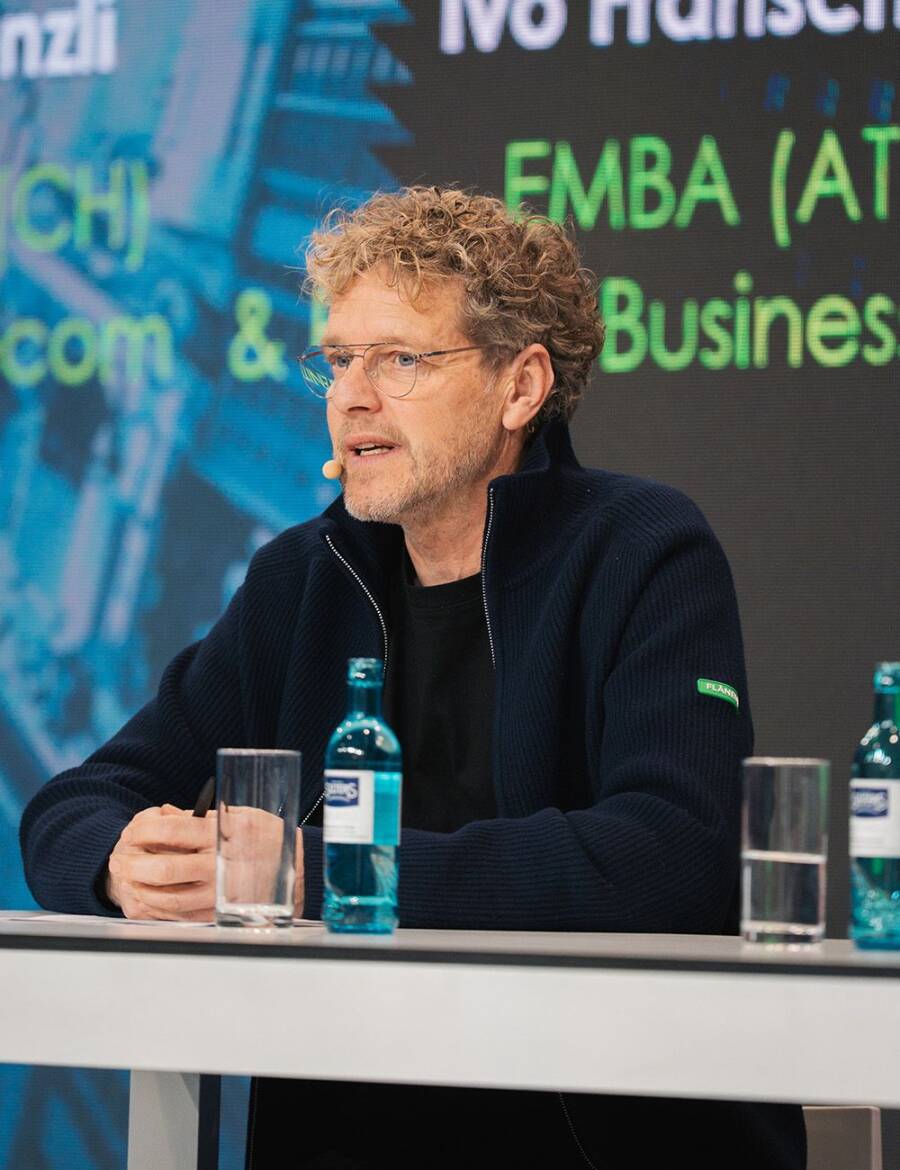
We live in a time when societies are becoming more polarised and communication increasingly takes place through screens and algorithms. Our industry creates something increasingly scarce: real encounters between people.
How do we continue creating meaningful human connection in a world that is becoming more digital, more fragmented and more complex?
© Messe Dortmund / Wolfgang Helm
About Maarten Schram:
Maarten Schram is the founder and managing director of LiveCom Alliance, which he established in 2016. He also leads IDEA, the Dutch association of leading agencies for events and live communication. In addition, he serves as Mission Lead for CreativeNL and as a jury member for international industry awards. Schram has worked in the event and live communication industry for around 30 years. His work focuses on international networking, knowledge transfer and the continued development of the European event industry.
Today, the LCA sees itself as a European platform for live communication. What does that mean in concrete terms? What role does the Alliance play for national associations, agencies and companies across Europe?
Maarten Schram: LiveCom Alliance is deliberately not another national association at European level. Our members are the national associations themselves. Our role is to connect them and create a layer above the national markets where knowledge, experiences and perspectives can be shared.
Sometimes that results in research. Sometimes in guidelines, shared practices or international connections. And sometimes the greatest value is simply knowing that you can pick up the phone and speak to a trusted colleague in another European market. That network may sound intangible, but in an increasingly international industry it is extremely valuable.
The LCA currently brings together eight national organisations and reaches more than 1,000 agencies and companies across Europe. What does this reach say about the relevance of live communication as a European industry?
Maarten Schram: It demonstrates that we are not talking about a niche discipline. Live communication represents a substantial creative and economic ecosystem across Europe, employing thousands of people and connecting strategy, creativity, production, technology, hospitality and many other disciplines.
At the same time, I think we should remain modest about those numbers. Eight countries are meaningful, but Europe is obviously much larger. One of the lessons from the past ten years is that building and maintaining a truly European network requires continuous energy and commitment. So I see those 1,000+ companies both as an achievement and as a reminder that European collaboration is never finished.
The guiding principle of the LCA is ‘Unite. Learn. Inspire.’ How important is this combination at a time when the industry is becoming more international, more complex and more connected?
Maarten Schram: It demonstrates that we are not talking about a niche discipline. Live communication represents a substantial creative and economic ecosystem across Europe, employing thousands of people and connecting strategy, creativity, production, technology, hospitality and many other disciplines.
At the same time, I think we should remain modest about those numbers. Eight countries are meaningful, but Europe is obviously much larger. One of the lessons from the past ten years is that building and maintaining a truly European network requires continuous energy and commitment. So I see those 1,000+ companies both as an achievement and as a reminder that European collaboration is never finished.
The European Industry Survey 2025 shows that internationalisation has already become a reality for many companies in live communication. Which findings are particularly important to you?
Maarten Schram: The most striking finding is probably that internationalisation is no longer something only a small group of large agencies does. Our 2025 survey showed that 56.6% of respondents are internationally involved, and 61% of internationally active companies operate beyond Europe. International business already accounts for a meaningful share of revenue for many agencies.
What I find equally interesting is why companies internationalise. It is not simply about following clients abroad. It is also about access to new markets, knowledge, talent, partnerships and opportunities. At the same time, our research shows that barriers remain: cultural differences, legal frameworks, logistics and finding the right partners. And that brings us back to the importance of trusted international networks.
What does it take for international cooperation in live communication to work successfully?
Maarten Schram: Perhaps it is even more relevant today than it was ten years ago. Unite, because many of the challenges we face no longer stop at national borders. Learn, because technology, sustainability, changing client expectations and new business models are developing too quickly for anyone to have all the answers individually. And Inspire, because this is ultimately a creative industry. Data and knowledge are important, but progress also comes from seeing what others are doing and imagining what could be possible. The words have stayed the same for ten years. Their meaning has probably only become stronger.
Many companies are deeply rooted in their local markets while also working for international clients. How is this changing the industry’s self-image?
Maarten Schram: I actually think the combination of local roots and international reach is becoming one of the defining characteristics of our European industry. You do not have to become less Dutch, German, French or Italian in order to become more international. Quite the opposite: local culture, creativity and knowledge are often exactly what make agencies interesting internationally. Europe should not try to become one homogeneous market. Its diversity is one of its creative strengths. The challenge is to make that diversity easier to access across borders.
Europe’s strength lies in connection: Maarten Schram in conversation with boe international. © Messe Dortmund / Wolfgang Helm
© Messe Dortmund / Wolfgang Helm
Ten years of LiveCom Alliance: Founder and managing director Maarten Schram on European collaboration, international opportunities and the power of personal encounters
Europe’s event industry is diverse, internationally connected and firmly rooted in its national markets. Since 2016, LiveCom Alliance has brought together industry associations from what are now eight countries and, through their networks, reaches more than 1,000 agencies and companies. To mark its tenth anniversary, boe international spoke with founder and managing director Maarten Schram about the development of the industry, the value of personal encounters, the partnership with boe international and how European collaboration can generate even greater impact in the years ahead.
The LiveCom Alliance will celebrate its tenth anniversary in 2026. What was the original idea behind founding the LCA – and what has been the most important milestone for you since then?
Maarten Schram: When we founded LiveCom Alliance in 2016, the idea was actually quite simple: Europe has an incredibly strong live communication industry, but it was largely organised within national borders. We wanted to connect those national communities, learn from each other and create a stronger European perspective.
That became our guiding principle: Unite. Learn. Inspire.
Looking back, I don’t think there is one single milestone. I am proud that we built a trusted network of eight national associations, representing more than 1,000 agencies and companies. But perhaps even more important is that we managed to create something that did not really exist before: a continuous European knowledge base for our industry.
The European Industry Survey has played a crucial role in that. It allowed us to move from assumptions and national anecdotes towards comparable European insights. And during Covid, when our industry was hit incredibly hard, that network and that data became particularly valuable. Ten years later, I think that combination of community, knowledge and trust is probably our most important achievement.
How has the European event and live communication industry changed over the past ten years?
Maarten Schram: The biggest change is that live communication has moved much closer to the strategic heart of organisations and brands. Ten years ago, events were still often seen primarily as an executional discipline. Today agencies are increasingly involved much earlier: in strategy, experience design, content, technology, sustainability and impact.
At the same time, the definition of “live” has broadened. Digital and hybrid formats have become part of the toolbox, data has become more important, and AI is rapidly changing how we develop and deliver experiences. But interestingly, all that technology has also reminded us of something very fundamental: the value of being physically present together. The pandemic made that particularly visible. Human interaction creates trust, emotion and memory in a way that is very difficult to replicate. That is why I believe live communication has become more relevant, rather than less relevant, in an increasingly digital world.
The LiveCom Alliance and boe international have been working together as partners since 2019. From your perspective, what makes this connection particularly valuable – especially for exchange within the European event industry?
Maarten Schram: First of all, I think this anniversary is also an opportunity to say thank you.
A European network like LiveCom Alliance can only exist when partners believe in the importance of connecting an industry beyond national borders. boe international has supported that ambition for many years. This partnership has been particularly important in enabling us to invest in knowledge and research. Building a European knowledge base requires continuity. You cannot do meaningful research once and then stop; you need to follow developments over time.
boe’s long-term support has helped us create that continuity and made initiatives such as our European Industry Survey possible. But there is another side to the partnership that is equally important. Research creates knowledge; meeting places create exchange. boe brings people together physically, which gives those European insights a place to be discussed, challenged and turned into new connections. For me, those two things belong together.
boe sees itself as an industry meeting place for people, ideas and innovations in the event industry. What role can in-person platforms play in making European topics, perspectives and networks more visible?
Maarten Schram: EAn essential role. We can publish reports, share data and connect people digitally, but ultimately industries are built by people who know and trust each other. Especially in Europe, personal platforms are important because our strength lies in our diversity. Markets differ, cultures differ and ways of working differ. Meeting each other helps us understand those differences rather than trying to eliminate them.
And that is also where a platform such as boe becomes more than a trade show. It can be a place where national perspectives become European conversations. In that sense, physical industry meeting places and LiveCom Alliance share a very similar belief: connection creates progress.
Where do you see shared opportunities to further develop the exchange between LiveCom Alliance, boe international and the European event industry in the coming years?
Maarten Schram: I think the opportunity is to become even more focused on where European exchange genuinely adds value. Over the past ten years we have learned that simply creating more meetings, more content or more initiatives is not necessarily the answer. The question should always be: where can we do something together that individual countries or organisations cannot achieve as effectively on their own?
Research is one obvious area. Understanding market developments across borders is becoming increasingly important as agencies and clients internationalise. But I also see opportunities around smaller, focused exchanges: bringing the right people together around topics such as international collaboration, talent, AI, sustainability or new business models. As LiveCom Alliance enters its second decade, that is also an important question for us: not simply how we continue what we have been doing, but where we can create the greatest European value next. I think boe can remain an important partner in exploring that together.
“Internationalisation does not necessarily mean building offices everywhere. Often the stronger model is to combine international ambition with strong local knowledge.”
Advert
Which topics will shape the European event industry most in the coming years: internationalisation, sustainability, AI, talent, economic pressure – or entirely different developments?
Maarten Schram: All of those topics matter, but I think there is a larger question underneath them: how do we continue creating meaningful human connection in a world that is becoming more digital, more fragmented and more complex?
AI will fundamentally influence how agencies work. Sustainability will increasingly become a prerequisite rather than a choice. Talent and economic pressure will force companies to rethink how they organise themselves. And internationalisation will create both opportunities and complexity. But technology should ultimately strengthen human connection rather than replace it. I still like the formulation we used recently: sustainability is the compass and technology the accelerator — but the human factor must remain central. That, to me, is the bigger direction of travel.
What priorities should the LCA set in the coming years to connect the industry more closely and help it move forward together?
Maarten Schram: After ten years, I think it is healthy to ask that question again from scratch. Organisations should not continue doing things simply because they have always done them. The first decade of LiveCom Alliance was about building connections, creating a European network and establishing a shared knowledge base.
The question for the next phase is: what does our industry need now? I see a strong need for timely, comparable European market intelligence, particularly in a period of economic uncertainty and rapid change. And I see a need for focused European encounters where people can exchange knowledge and build trusted relationships.
So our next chapter may not necessarily be about doing more. It may be about becoming even more focused, agile and relevant. The principle behind it, however, remains unchanged: bringing Europe’s live communication community together where doing so creates genuine added value.
How do we continue creating meaningful human connection in a world that is becoming more digital, more fragmented and more complex?
If you could make one wish for the European event industry to mark the LCA’s tenth anniversary, what would it be?
Maarten Schram: That we keep believing in the power of connection — both within our industry and in the work we create. We live in a time when societies are becoming more polarised and communication increasingly takes place through screens and algorithms. Our industry creates something increasingly scarce: real encounters between people.
My wish would be that Europe recognises live communication not only as an economic and creative industry, but also as a powerful instrument for creating understanding, trust and belonging. And for our own industry: stay curious, share more and keep crossing borders. Because after ten years of LiveCom Alliance, I am perhaps more convinced of the original idea than ever: we are stronger when we connect.
We live in a time when societies are becoming more polarised and communication increasingly takes place through screens and algorithms. Our industry creates something increasingly scarce: real encounters between people.
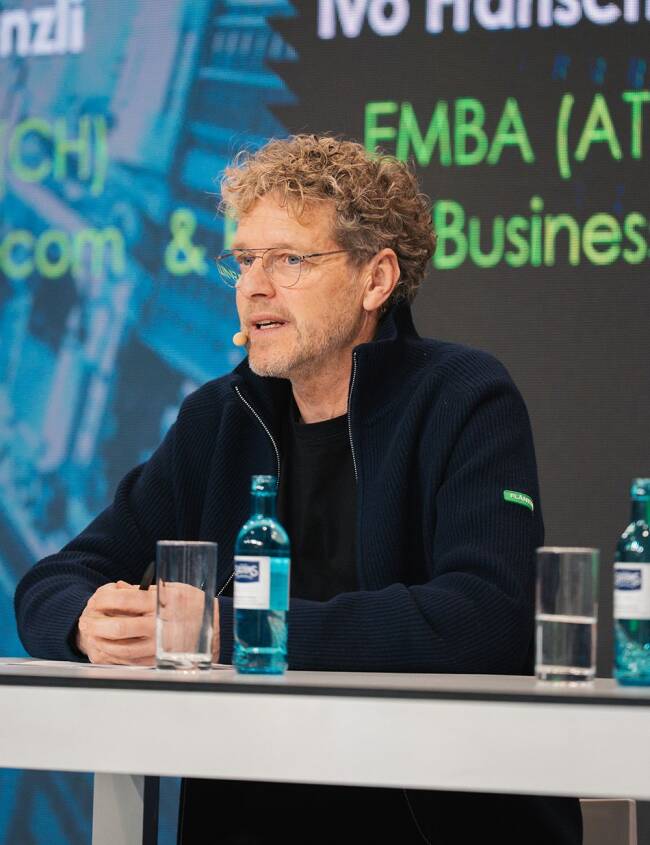
About Maarten Schram:
Maarten Schram is the founder and managing director of LiveCom Alliance, which he established in 2016. He also leads IDEA, the Dutch association of leading agencies for events and live communication. In addition, he serves as Mission Lead for CreativeNL and as a jury member for international industry awards. Schram has worked in the event and live communication industry for around 30 years. His work focuses on international networking, knowledge transfer and the continued development of the European event industry.